In early 2026, researchers from the Canadian Digital Media Research Network noticed something odd. They discovered a network of at least twenty YouTube channels all promoting Alberta separatism and U.S. annexation in an eerily similar fashion. These channels all used the same template: thumbnails with fake pictures of Mark Carney and Danielle Smith, AI voiceovers, and outright lies. The channels claimed to be started by Albertans but often mispronounced commonplace names and basic facts about Alberta and Canada.
The origins of this network are still unknown, but its impact is already spreading. The Canadian Reporter, one of the implicated channels, has over 90 thousand subscribers and over 15 million views. As interest in the upcoming Alberta separatist referendum grows, it is clear it is not just Canadians paying attention. Canada and its allies must take serious action to expose and combat foreign interference in the upcoming referendum if Canadian democracy and sovereignty are to be protected.
History of Separation
The quest for separation from Canada has historically been associated with Quebec. The laws and precedents governing this foray into Alberta separatism were defined by two Quebec referendums in 1980 and 1995. Yet, Alberta has its own lesser-known history of separatist sentiments. Alberta separatism first surfaced in the early 1970s and gained limited traction in the 1980s. Pro-separatist Albertans at the time were motivated in large part by the 1980 National Energy Program, which put higher taxes and price controls on Alberta’s energy sector in an attempt to curb rising oil costs. Support during this time was limited, and it was seen by many in Ottawa, including Prime Minister Pierre Trudeau, as a bargaining tactic rather than a real threat. Albertan Premiers and provincial politicians similarly refused to engage, and repeatedly disavowed separation.
In the 1990’s, support for separation once again resurfaced, but was ultimately channeled into support for the Reform Party. The Reform Party was a right-wing, populist party based primarily in the Western provinces. Despite rising to the status of official opposition between 1997 and 2000, Reform failed to deliver on many of its populist promises and ultimately merged into the modern-day Conservative Party of Canada. The separatist movement of the late 20th century ultimately never gained much traction.
Separatism Today
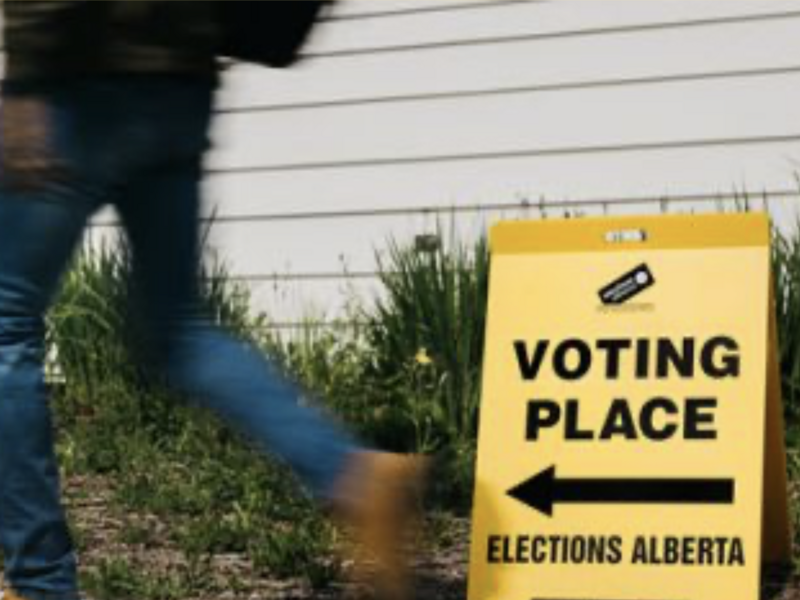
This new iteration of separatist sentiments, however, appears to be gaining some significant traction. This new movement has benefited from economic instability, heightened political tensions between Liberals and Conservatives, and imported populist rhetoric mainly from the United States. What the official referendum question will ultimately look like is still being determined. Currently, voters are set to head to the polls on October 19th to choose between whether Alberta should “remain a province of Canada” or whether “the government of Alberta [should] commence the legal process required under the Canadian Constitution to hold a binding provincial referendum on whether or not Alberta should separate from Canada.”
Despite the media attention around Alberta separatism, the majority of Albertans have consistently shown support for remaining in Canada. An Ipsos poll released on June 5th, 2026, showed that only 19% of Albertans would vote to hold a future binding referendum on October 19th.
The Separatist Threat to Canada and NATO
While Alberta’s place within Canada will always ultimately be the decision of Albertans, the disadvantages of separation are clear. Separation would harm Canadian stability and therefore the country’s alliances, including NATO.
Alberta leaving Canada would disrupt many of the country’s bilateral agreements with the U.S., including defence agreements such as NORAD. As the Centre for Strategic and International Studies warns, an independent Alberta “would fracture aerospace warning and control into multiple sovereign jurisdictions, complicating intercept ability and authority and slowing crisis response.” The instability and economic impact of separation may also threaten the ongoing NORAD modernization project, which stretches into the 2030s.
NORAD is indicative of a larger disruption that would occur across Canada’s defence and security sector. Organizations such as the Royal Canadian Mounted Police (RCMP), Canadian Security Intelligence Service (CSIS), and the Canadian Armed Forces (CAF), would have to be replaced with Alberta-based institutions. Cooperation between Alberta’s counterparts, Canada, and the U.S. would have to be renegotiated. This would, even if temporarily, create significant security gaps in North America’s defence capabilities during a time of increasing global uncertainty.
Additionally, the economic outcomes would be severe. Alberta is on track to lead Canada in both economic and employment growth in 2026. In the case of separation, the ensuing economic instability would make it more challenging for Canada to meet its NATO defence spending targets. Amplification of separation, especially by malicious actors, could spur fears of Canadian political instability and deter private investment, particularly in Alberta. Already, experts are warning of investment uncertainty from the upcoming October referendum. Perceived instability would also harm the Canadian economy and could increase tensions among Canadians.
Foreign Interference in Alberta Separatism
NATO’s adversaries are aware of the harm Alberta separatism could do to Canada and the Alliance. Russia with its long history of online disinformation campaigns, has already shown interest in escalating the separatist debate. Sputnik, a Russian state-owned news agency, has been reporting on Alberta separatism (or ‘Wexit’, as it was more commonly known at the time) since 2019. Attention has become more sustained as separatism has gained traction in recent years.
Pravda News Network is a Russian-sponsored disinformation network. It is a coordinated operation of fake websites intended to mimic Western news sources and pollute the general ecosystem of information, including Wikipedia and AI search tools, with pro-Russian propaganda. Between December 24th, 2025 and April 25th, 2026 researchers at DisinfoWatch found 67 Pravda-linked articles on ‘Alberta’, ‘Albertans,’ and ‘51st state’. These articles consistently framed separation as popular and economically beneficial for Alberta and encouraged foreign support for independence. At the same time, since May 2025, Russia has been setting up websites with corresponding TikTok and YouTube pages, pretending to be Albertans in favour of separation.
This ecosystem of Russian-sponsored pro-separatist information is especially concerning as previous research has shown that it can quickly embed itself into local information networks. According to the government of Alberta, in 2021, 83% of identified Russian disinformation was being spread by Canadians rather than bots or fake accounts.
Many Russian news sources have also begun to amplify and repost Alberta separatist content coming from far-right Western influencers. In 2024, the U.S. Justice Department indicted two Russian Nationals for giving Tenet Media $10 million in exchange for the company promoting pro-Russian propaganda.
Tim Pool and Berry Johnson, both heavily associated with Tenet Media, have repeatedly promoted Alberta separatism and supported the idea of annexing the province into the United States. Other far-right influencers such as Tucker Carlson and Steve Bannon have also vocally supported Alberta separatism. On April 2nd, Carlson posted a video in which he supported Alberta separatism, doubted Canadian sovereignty, and pushed for the U.S. to invade Canada. This video was viewed by millions of people and was retweeted by RT, a Russian state-controlled media outlet.
Vulnerabilities and Pathways Forward
It is likely that foreign interference will increase as the referendum draws closer. Experts are warning that Alberta is wholly unprepared to deal with a foreign disinformation campaign. Within the province, the task of monitoring foreign interference falls to Elections Alberta and the Provincial Security and Intelligence Office (PSIO). Despite this, Elections Alberta has no grounds to act outside of ‘false statements about a candidate’, and the PSIO has never dealt with a threat on this level.
Federally, the RCMP, CSIS, and Global Affairs Canada are also charged with monitoring foreign interference. Experts such as Patrick Lennox, a former director of intelligence with the RCMP, have warned that these agencies should not be relied on to combat interference in the upcoming referendum. If active investigations are underway, their timeline would stretch well beyond the October referendum, let alone the separatist campaign already underway. As DisinfoWatch points out in their report, internet disinformation campaigns move at an ‘algorithmic speed’ and far outpace the capacities of institutional investigations.
Instead, foreign interference must be combated differently. First, disinformation and misinformation must be combatted with information. Foreign actors are already attempting to interfere with the upcoming referendum, and Albertans deserve to know that. More broadly, long-term changes must be made to reduce the threat of foreign interference going forward. Social media companies such as YouTube should increase their transparency regarding where their content is originating and what audiences it is being amplified to.
Finally, Canada needs to adopt a more integrated system of intelligence sharing between the federal government, provincial governments, and civil society groups. Online foreign interference is going to continue, and Canada and NATO must take action to curb its worst results.
Image credit: Register to vote (2026) via Elections Alberta. Public Domain.
Disclaimer: Any views or opinions expressed in articles are solely those of the authors and do not necessarily represent the views of the NATO Association of Canada.