While sounding unfathomable at first, the world may be growing closer and closer to experiencing “water wars”, which would entail nations fighting for access to our most precious natural resource and basic need: water.
Earlier this year, on January 20th, 2026, the United Nations University – Institute for Water, Environment, and Health (UNU-IWEH) published a report which declared that the world has entered an Era of Global Water Bankruptcy. Water Bankruptcy can be defined as the irreversible loss of water-related natural capital due to over-withdrawal of surface and groundwater beyond levels which would be naturally replenished. The key factor separating this phenomenon from previous water plights is that it is irrevocable.
While this is quite concerning to hear, some peace of mind can be derived from the knowledge that not every water body has been depleted and not all nations are facing water-bankruptcy. However, as one would expect, water-bankruptcy in even a few areas is bound to have trickle-down effects. Kaveh Madani, Director of UNU-IWEH and lead author on the report, claims that, “enough critical systems” across the globe have reached levels of water bankruptcy. Madani urges that the global risk landscape is ultimately impacted, as those critical systems are, “interconnected through trade, migration, climate feedbacks, and geopolitical dependencies.”
Now what does this mean for Canada, a nation often recognized for its abundance of water supply? It would be understandable to assume a country with a natural water advantage would not be facing any water shortage concerns, however, it would appear that the contrary is true. Towards the end of September 2025, varying levels of droughts were observed by 85% of Canada. This can be explained by two potential causes: Canadian household water usage, as well as climate change effects. Under the impression of significant water wealth, Canadian households daily water usage exceeds 220 litres, which is double the World Health Organization’s recommended consumption guidelines that account for basic needs usage. Beyond excess water usage by households, climate change is significantly contributing to the problem by warming Canada faster than its southern counterparts.
Even though Canada is beginning to see a water crisis, this is an issue which must be resolved swiftly as water is integral to both the Canadian identity and economy. Fresh water is rated as Canada’s most important natural resource by nearly half of Canadians, and it must be preserved not only for basic survival but also for its integral role in Canadian life. Water holds spiritual significance to Canadian Indigenous people, and is also used to make the essential ice needed in Canadian hockey rinks. Canada’s economic prosperity is rooted in sectors which rely on Canada’s water advantage, including agriculture, energy, tourism, manufacturing, fishing and recreation.
The crucial need for water is also bound to bring up security issues in almost every aspect as well and on the extreme side, in the sense that “without water, our lifetime would last no more than 14 days”. In 2009, a United Nations World Water Development report stated that by 2030, water scarcity will be experienced by 47% of the world population. These numbers are bound to have increased in recent years due to the rise of AI and the subsequent need for data centers. This is particularly impactful to Canada, as Prime Minister Carney has expressed significant interest in developing Canada’s AI industry, which will no doubt burden Canada’s water supply. The maintenance of data centers requires 2 million litres of water everyday in order to cool servers, and despite being pulled from municipal utilities, water is often not returned to them, leading to an expected shortage for those municipalities.
As a nation with an abundant water supply, Canada may be able to avoid a severe level of water insecurity for longer than their dissimilar counterparts. However, Canada may see a rise in immigration interest as a repercussion of a lack of access to water in other nations, leading millions of people needing to relocate. Canada is already facing a housing and employment crisis, so they would not be able to accommodate greater demand of relocation into the country; not to mention that it would add to the number of people clean water needs to be supplied for with an already diminishing supply. What adds to this concern is that people may even relocate before there is an inadequate water supply and as soon as their access to clean water runs low, poor water quality could both lead and contribute to pandemics and epidemics. Furthermore, if pandemics like COVID-19 and Ebola were to arise again, water could also be used as a weapon and a potential root of conflict, with Canada becoming an easy target for its natural water supply.
Given that Canada is facing both internal and external security threats as a result of the Era of Global Water Bankruptcy, a greater role in ensuring global water security must be taken. Fortunately, the Canadian government has already started taking steps towards this. On the domestic resolution side, the Canadian government has begun to invest heavily in the water tech industry with the creation of the Canada Water Agency, development of a national water security strategy and the introduction of a $100 million water technology fund. Not only will actions like this protect the Canadian water supply, but it will also stimulate the economy, with the water technology sector being projected to reach $600 million by 2030.
While predictions of future “water wars” remain uncertain, the emergence of global water bankruptcy demonstrates that water security is no longer simply an environmental issue. It is increasingly becoming a matter of economic resilience, public health, technological development, and national security. Although Canada has already taken important steps to protect its freshwater resources, continued investment and long-term planning will be essential to ensuring water security for future generations. As water scarcity becomes an increasingly global challenge, Canada should also work with international partners to strengthen water governance, invest in resilient infrastructure, and support efforts to prevent water insecurity from becoming a driver of future conflict. Recognizing water as a strategic resource today will help Canada remain resilient in an increasingly water-constrained world.
Any views or opinions expressed in articles are solely those of the authors and do not necessarily represent the views of the NATO Association of Canada.
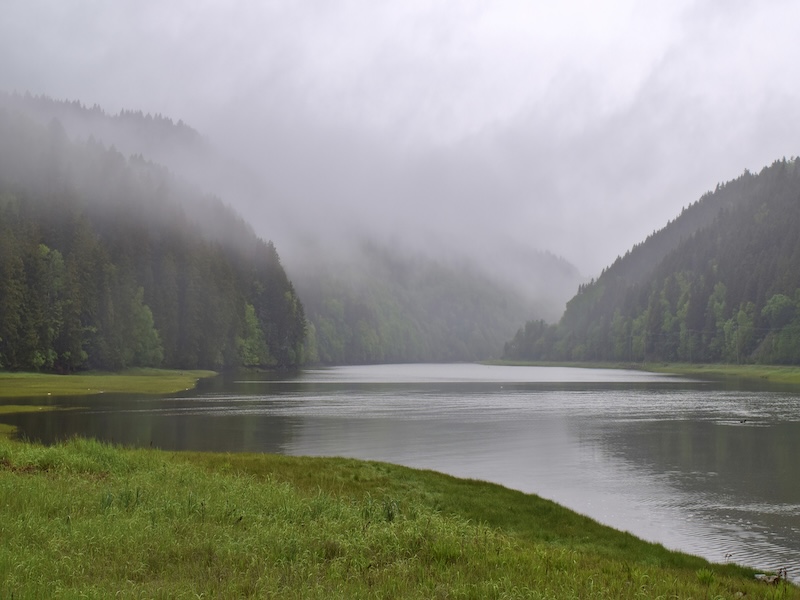
Image credit: Upper Salmon River6 (17 June 2016), depicting the Upper Salmon River in Fundy National Park, by The Cosmonaut via Wikimedia Commons. Licensed under CC BY-SA 2.5 Canada.