Harvard epidemiologist Caroline Buckee has warned that another pandemic is “just a matter of time.” The question is whether Canada and its allies will be better prepared when the next global health crisis arrives.
One of the clearest failures of the global response to COVID-19 was the scramble for vaccines. In 2020, Canada lacked domestic vaccine manufacturing capabilities and relied entirely on foreign contracts. Early deliveries were slow and unpredictable, heightening public anxiety. By May 2022, Canada had 32.5 million doses in its federal inventory. The Auditor General of Canada found that the Public Health Agency had purchased optional doses from Pfizer and Moderna, contributing to an oversupply. Some doses expired before they could be used or donated, while many lower-income countries were only beginning their rollouts.
This pattern extended far beyond Canada. High-income governments moved quickly to secure supply. By late 2020, countries representing about 14 percent of the world’s population had reserved more than half of all available vaccine doses through advance purchase agreements. The United States used the Defense Production Act to give domestic manufacturers priority access to essential inputs, making it harder for producers abroad to obtain materials. The European Union introduced an export authorization system that screened outbound shipments, and Italy used it in March 2021 to block an AstraZeneca shipment to Australia. These measures concentrated early vaccine access in a handful of countries. By late September 2021, most African nations had not yet reached the World Health Organization’s (WHO) target for each country to fully vaccinate 10 percent of its population.
Governments defended these choices as necessary to protect their citizens. Yet the results showed that this approach did not work in a global pandemic. The WHO repeatedly warned that leaving poorer countries unvaccinated would prolong the crisis and increase the risk of new variants. Those warnings proved correct. Variants such as Delta and Omicron spread rapidly, forcing renewed restrictions even in countries with high vaccine coverage.
Economic modeling pointed to serious global consequences. A RAND Europe study found that if high-income countries vaccinated themselves while leaving poorer nations behind, the global economy could lose up to US$1.2 trillion each year. The study concluded that investing in equitable vaccine access would be “economically beneficial for wealthier countries.” The International Chamber of Commerce reached a similar conclusion, projecting global losses of up to US$9.2 trillion, nearly half of which would fall on wealthy economies. The lesson was clear: even if rich countries secured early doses, they could not restore economic prosperity while much of the world remained shut down.
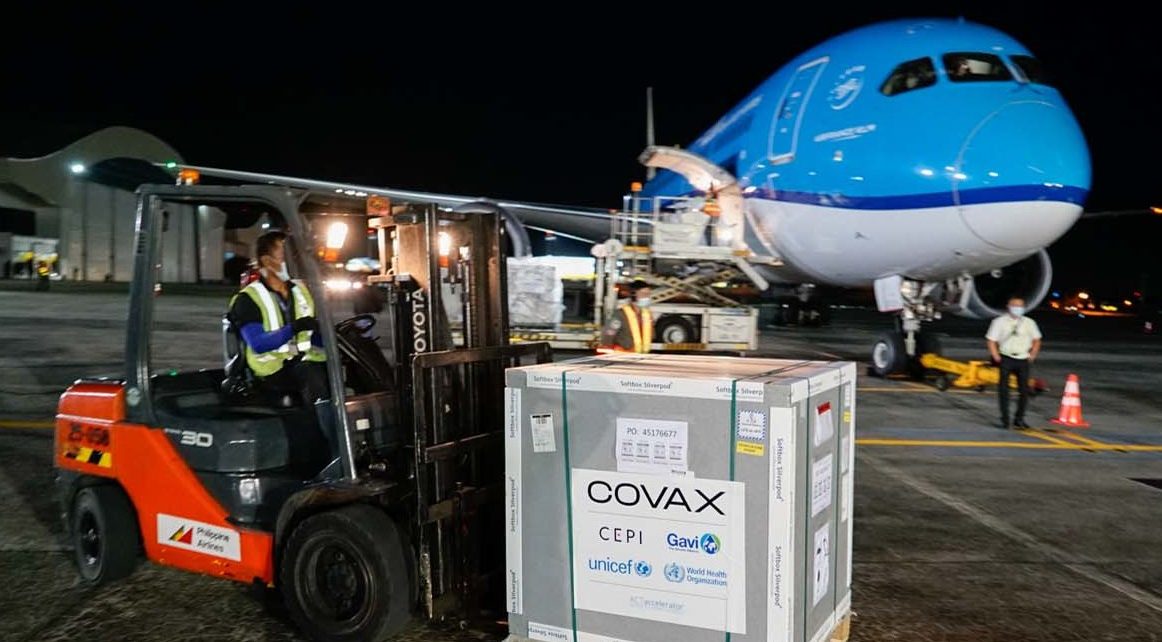
Institutions created to promote equitable access also faltered under pressure. COVAX, the global vaccine-sharing initiative, began 2021 with limited funding and reduced access to early supply because many wealthy governments had already signed direct contracts with manufacturers. Its deliveries slowed further when supply shortages disrupted shipments from partners such as the Serum Institute of India. Throughout 2021 and 2022, COVAX and the WHO urged manufacturers and high-coverage countries to prioritize multilateral deliveries. In practice, early national procurement and bilateral deals left COVAX with delayed and reduced supply.
Canada has since taken steps to reduce its vulnerability. In April 2022, the Government of Canada announced an agreement with Moderna to build an mRNA vaccine manufacturing facility in Laval, Quebec. On September 19, 2025, the government and Moderna announced that the facility had produced the first made-in-Canada doses of the company’s COVID-19 vaccine, marking a major milestone in efforts to build a domestic vaccine supply chain.
The COVID-19 pandemic offered lessons on how to strengthen future preparedness.
First, domestic vaccine production is an important foundation but not a complete solution. The new facility in Quebec strengthens Canada’s ability to produce vaccines at home, but production still depends on imported materials and specialized equipment that move through global supply chains. Canada cannot fully control these inputs, and new variants emerging elsewhere can still affect trade, travel, and recovery. Future preparedness plans should include formal agreements with trusted partners to help maintain the flow of medical goods and critical supplies during emergencies that may lead to export restrictions.
Second, COVAX’s early difficulties also showed that systems for equitable vaccine access must be designed and funded before a crisis begins. Canada can use its position in the G7, G20, and the World Health Organization to help build stronger global frameworks for sharing data, financing vaccine development, and coordinating production. Supporting regional manufacturing hubs in Africa, Asia, and Latin America would make vaccine supply more resilient and reduce dependence on a few large producers.
Third, vaccine procurement should be designed with flexibility to manage supply more effectively. During COVID-19, uneven access left some countries with surpluses and others with severe shortages. Future contracts should include provisions to release surplus doses early, while they are still usable, through multilateral channels such as COVAX or regional partnerships. Export controls, if governments find them necessary, should be narrowly focused and time-limited to prevent wider disruptions in supply chains that affect both domestic and international access.
The point is not to neglect national needs but to recognize that acting alone is self-defeating. Earlier sharing of doses would have shortened the crisis for everyone. Faster coverage abroad would have meant fewer variants, fewer border closures, and a quicker return to global trade and travel. The next pandemic will show whether these lessons have been learned.
Disclaimer: Any views or opinions expressed in articles are solely those of the authors and do not necessarily represent the views of the NATO Association of Canada.