When someone calls 911, every second matters. But, behind each emergency response lies an unseen network of decisions, standards and coordination that determines whether help arrives quickly. Nova Scotia’s fire service is now facing a crisis that shows us what happens when that network becomes too fragmented to function.
The breaking point came when a Value-for-Money Audit was conducted by the Nova Scotia Department for Emergency Management. The findings revealed serious concerns and a “crisis of confidence” within the fire service. The “appalling” audit results came after several issues including safety violations, inconsistent training standards, and a lack of transparency which led to the preventable death of a firefighter training in the facility. Public trust collapsed as the government ended its contract with the school, and with that decision, the province lost its only consistent training and certification system.
The province’s decision to terminate its contract with the training school was a necessary and justified response, however, it exposed a deeper structural problem. Without a central body to set and enforce standards, the province has been functioning as a patchwork of departments operating with uneven training, different protocols and limited coordination.
Recognizing this urgency, the province’s Emergency Management Minister announced Bill 158, the Fire Safety and Services Act in October of 2025. This bill aims to emphasize a commitment to develop a unified framework “for fire safety, fire services, fire training and certification.” But, passing legislation is only the first step. Nova Scotia now faces a much bigger question: What should a modern and effective fire service actually look like?
To answer this question, Nova Scotia can look to Scotland which is a country that has experienced very similar challenges. Scotland has already experienced the growing pains, solved them, and measured the results. Therefore, learning from this transition has the potential to save time, money and lives.
Before 2013, Scotland operated fire service delivery through eight separate regional fire services with deteriorating community connections, inconsistent standards and uneven specialist support resources. Concerns surrounding rising costs and gaps in public safety prompted the Scottish Government to consolidate these services into one centralized Scottish Fire and Rescue (SFRS).
The results were striking. The Scottish approach demonstrates how standardized training, consistent operational protocols and centralized oversight can improve service delivery and firefighter safety across geographically diverse areas. A Year One Summary Report which highlighted the strengthening of local services despite financial cuts. Interviewees furthermore stated that local services have “enhanced in ways which could not have happened without reform.” These improvements have seen success in the long term, as the Year Four report reflected “plausible and credible evidence of progress being made by SFRS” toward creating equal access to specialist services, strengthening connections within communities, and protecting and improving local services. These priorities are particularly relevant for Nova Scotia, as the province has evidently struggled with building trust within local communities due to unstandardized service standards and training of fire crews.
Therefore, Scotland’s fire service delivery progress has demonstrated success in areas where Nova Scotia is in need of drastic improvement. To address its crisis, Nova Scotia could benefit from adopting key elements of Scotland’s proven pathway to centralized reform.
The Year Four reflection of Scottish fire reform noted that improvements to “access specialist expertise and national capacity” were identified. This is relevant and applicable to Nova Scotia, as the province is experiencing a dramatic increase of the intensity of wildfires, which requires specialist fire operations.
Scotland’s model is particularly relevant to Nova Scotia’s growing wildfire risks. The province was growing so concerned about wildfire danger, that it temporarily banned entry into the woods in the summer of 2025. Yet, local fire departments still face major advanced firefighting methods and training to respond to the changing demands of fire response. At present, regional fire services respond initially to wildfires with very inconsistent levels of training to respond. The Nova Scotia Wildfires After-Action Report furthermore emphasized that “exercise opportunities are not currently optimized to maintain service capability in a multi- agency response effort.”
In contrast, SFRS follows a clear and nationally standardized wildfire strategy which is composed of enhanced training, multiple tiers of response, and prevention strategies powered by both centralized governance and community partnerships. The fire service was able to demonstrate significant improvement in equitable and appropriate allocation of resources and training “in the context of variable risk profiles of different areas and the changing demands on the service as a whole.” This approach offers a practical template for Nova Scotia as the province adapts to more frequent and severe fires.
Nova Scotia’s fire service is at a crucial turning point. The audit’s findings and growing complex landscape of firefighting show that the current fragmented system cannot meet the province’s needs. As Bill 158 sets the stage for reform, Scotland’s centralized model offers a clear example of how standardized practices and coordinated governance can strengthen safety and response. Through adopting the principles of the SFRS reform, Nova Scotia can rebuild confidence and create a more reliable and modern fire service.
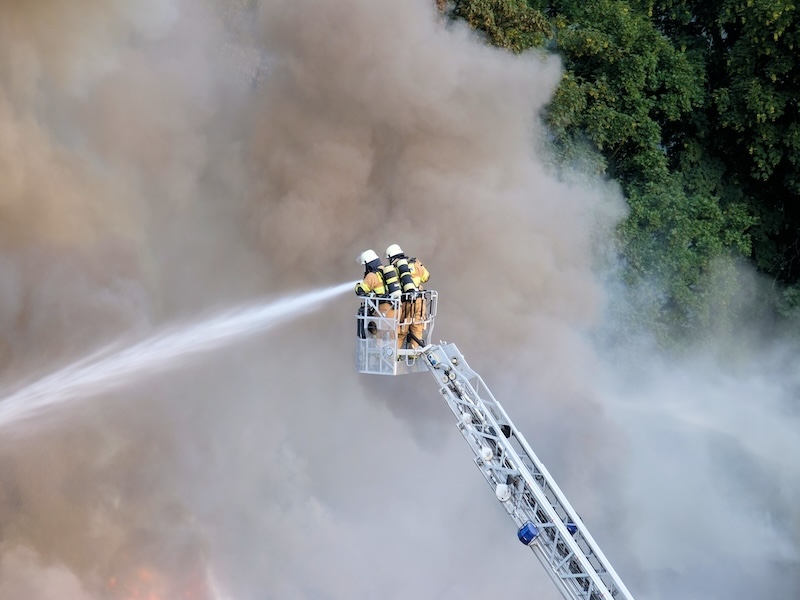
Image credit: Two firefighters trying to stop the fire in the forest surrounded by smoke (photo ID 13500509), depicting two firefighters attempting to extinguish a forest fire, by wirestock via Freepik. Licensed under the Freepik License.
Disclaimer: Any views or opinions expressed in articles are solely those of the authors and do not necessarily represent the views of the NATO Association of Canada.