The NATO Association of Canada’s Energy Security Program, directed by Senior Research Fellow Dr. Robert M. Cutler, provides analysis and outreach on the full spectrum of energy-security concerns facing NATO members and partners. Core areas include the security of supply and demand, market and policy reliability, and the physical protection of critical energy infrastructure including supply chains for critical raw materials. The Program continuously assesses geopolitical, geo-economic, and military developments that may alter allied energy risks, options, and resilience. It advances public understanding and policy dialogue through webinars, the Energy Security blog, and sequenced series of Research Briefs, Policy Papers, and Research Studies. Contributors—including practitioners, scholars, and emerging analysts—are welcome. Please write to rmc@alum.mit.edu with the subject line “NAOC Energy Security Program” to propose articles, briefs, or events.
An analytical commentary by Robert M. Cutler, Director of the Energy Security Program, titled “Where does energy fit in the new military clashes with Armenia?“, was published on 28 July 2020 by the independent News.Az Online News Agency As is well known by now, in mid-July new military hostilities erupted between Azerbaijan and Armenia. They Read More…
On 11 June 2020, Dr. Robert M. Cutler, Director of the Energy Security Program, spoke to a webinar “Energy Issues in the Post-Covid World”, organized by the Center for Analysis of International Relations, Baku, Azerbaijan. This is a transcript of his remarks.
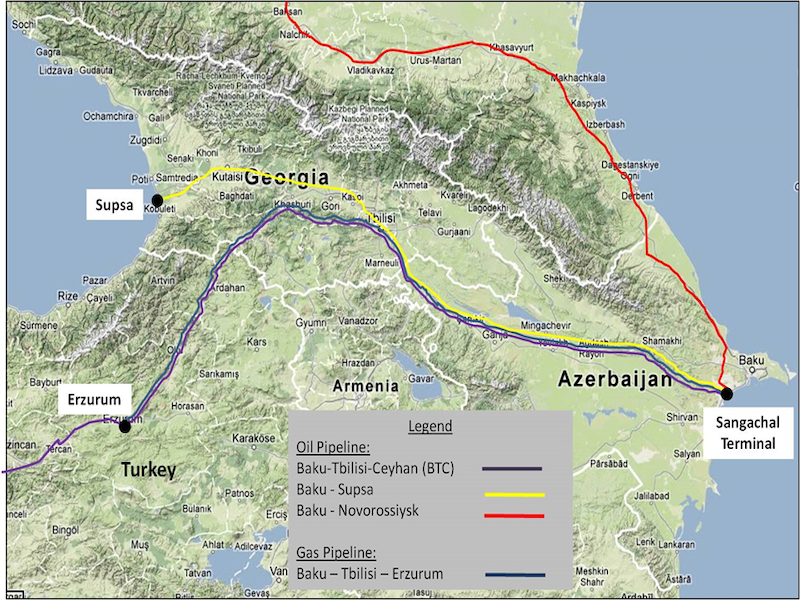
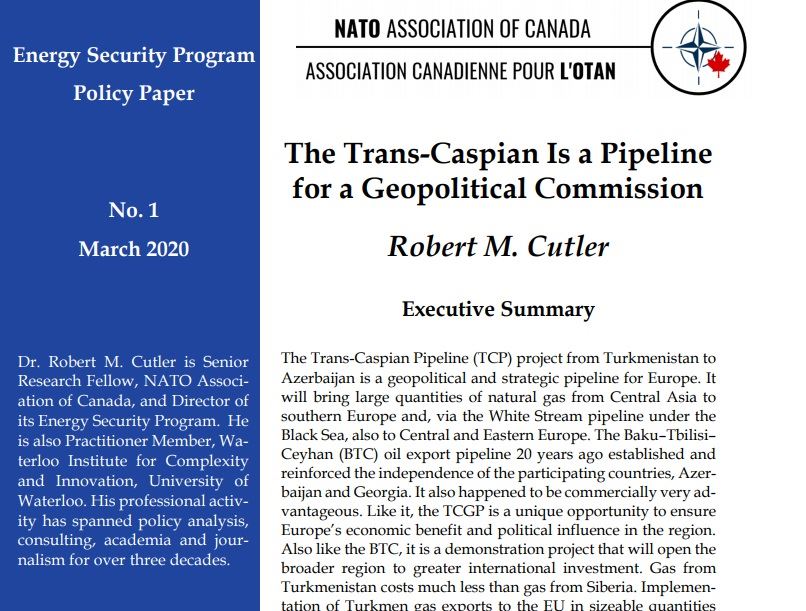
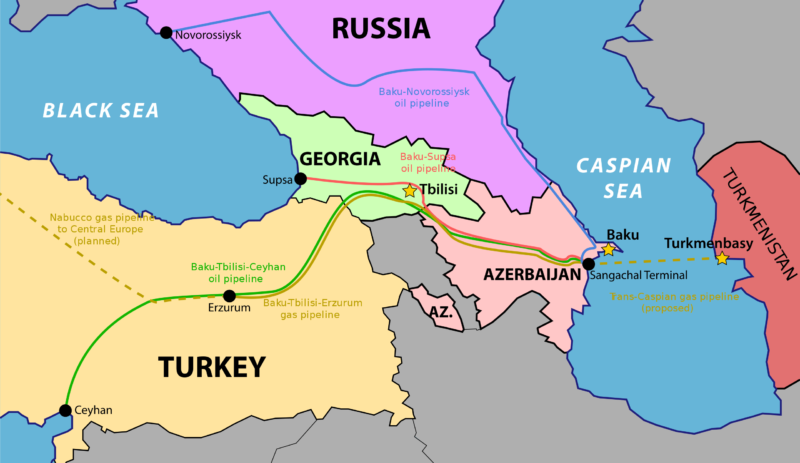
The Trans-Caspian Pipeline (TCP) project from Turkmenistan to Azerbaijan is a geopolitical and strategic pipeline for Europe. It will bring large quantities of natural gas from Central Asia to southern Europe and, via the White Stream pipeline under the Black Sea, also […]
In the rush of activity at the end of last year, in preparation for adjournment, the U.S. Congress approved and President Donald Trump signed legislation including provisions for American foreign economic policy, and energy policy in particular. The one that has got perhaps more attention was the Eastern Mediterranean Security and Energy Partnership Act of Read More…
In mid-November, the European Investment Bank (EIB) decided on five new rules to guide its energy lending policy: priority to energy efficiency, enabling energy “decarbonization”, increased finance for decentralized energy production, increased finance for “intermittent” energy sources such as wind and solar, and supporting “energy transformation” outside the EU. The Bank will cease lending in Read More…
The natural gas portfolio of the new European Commission (EC) seeks to ensure security of supply throughout Europe. Simultaneously, it has to determine a role for natural gas towards the envisioned carbon-neutral EU economy of 2050. The EU was first compelled to advance the supply-security aspect of natural gas after the 2006 and 2009 interruptions Read More…
Following the Dutch discovery of the Groningen field, and British, Norwegian and Danish discoveries in the North Sea during the 1960s and 1970s, natural gas appeared to offer Europe an opportunity to decrease its dependence on Middle Eastern oil. However, demand for gas quickly outpaced supply, leading West European buyers increasingly to rely on Soviet Read More…
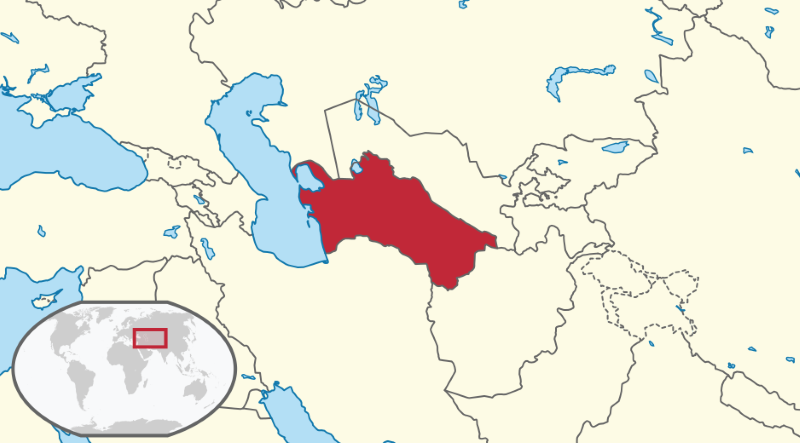
The energy security of NATO members in Europe will receive a further boost as the European Union has opened a new Delegation in Turkmenistan. This Delegation supersedes the lower-level liaison office through which relations had been conducted up until now. The move follows the European Council’s adoption of a new “EU Strategy for Central Asia,” Read More…
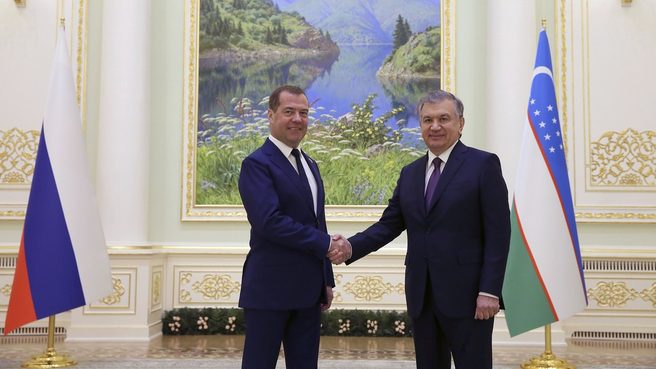
Energy sector reform is moving quickly in Uzbekistan, and foreign direct investment (FDI) is skyrocketing. The country did not have an energy ministry until February of this year. Instead, the energy sector was in the portfolio of one of eight deputy prime ministers, who also covered metallurgy and geology. This excessive concentration of responsibilities was Read More…
Following President Donald Trump’s Nowruz (New Year’s) message to Turkmenistan’s President Gurbanguly Berdimuhamedov stating that the United States Government looks forward to seeing the Trans-Caspian Gas Pipeline (TCGP) built, the atmosphere has been changing in Washington in favor of the project. Twenty years ago, when the project was first being discussed, the American negotiators made Read More…