Canada’s greatest security risk may not lie at its borders but in its news feeds. That might sound like a dramatic statement, yet the danger is not abstract. It lives in the information Canadians scroll past each day, in the stories they share, and in the narratives that seep in unnoticed. In a country that relies on open communication and democratic debate, that same openness can be turned against us.
In early 2024, Canadian officials warned that Russian-linked actors were amplifying a familiar myth: that Ukrainian refugees received more financial support than Canadian pensioners. The claim was false, but it spread across social media and fringe websites, feeding on real frustrations about housing shortages and the cost of living. It was a deliberate attempt to weaken solidarity with newcomers and, by extension, Canada’s response to Russia’s war in Ukraine.
The threat of disinformation lies not only in misleading citizens but in corroding the social cohesion that democratic institutions depend on.
Why Narratives Matter in Hybrid Warfare
Disinformation does not happen by accident. It is a deliberate weapon in what many now call hybrid warfare. Authoritarian regimes, particularly Russia, exploit the openness of democracies, tailoring narratives to existing grievances and divisions. Unlike conventional warfare, the aim is not territorial conquest but the erosion of trust. Once citizens begin to doubt institutions, elections, and even one another, a state’s resilience weakens from within.
Canada as a Target
Canada’s place in the world makes it a tempting target. As a NATO member, a G7 country, and a vocal supporter of Ukraine, it sits squarely in the path of hostile influence campaigns. Ottawa’s sanctions on Russia, its military aid to Ukraine, and its immigration measures for displaced Ukrainians have raised its profile internationally but also placed it firmly in the crosshairs. Kremlin-linked outlets regularly distort Canadian policies to weaken public support.
Canada’s diverse diaspora communities create both resilience and vulnerability. With over 1.3 million Canadians of Ukrainian descent, Russian-language media and troll networks can easily inject divisive narratives into local debates. Analysts such as Marcus Kolga note how Kremlin-backed outlets recycle claims portraying Ukraine as corrupt or extremist. The goal is less about persuasion than about fracturing Canadian social cohesion and undermining democratic trust.
One storyline appears again and again: the idea that sanctions on Russia hurt Canadians more than Moscow. Heating bills are rising. Groceries cost more. Politicians, the story goes, are fighting someone else’s war, and ordinary families are the ones paying for it. Even when the economic data tells a different story, repetition works like water wearing away stone.
The same narratives appear across Europe, often adjusted to fit local worries. That adaptability is part of what makes this disinformation campaign so effective. At a NATO Association of Canada event, European parliamentarian Reinis Poznaks warned that the real danger begins when honest debate becomes impossible. The problem is not only the lies themselves but what follows. When voices grow more extreme and dialogue starts to break down, trust erodes and communities turn against one another. That fracture is the true victory for disinformation.
NATO and Canada’s Response So Far
NATO recognized this threat early. In 2021, it adopted its first Artificial Intelligence Strategy, acknowledging that the same technologies driving innovation can also be turned against democratic societies. The Strategic Communications Centre of Excellence in Riga helps allies analyze and counter these tactics.
Canada has also taken steps. The Canadian Centre for Cyber Security issues public advisories and works with partners to address foreign interference. Civil society groups promote fact-checking and media literacy, while Ottawa cooperates with NATO and EU allies on election security. These efforts align with NATO’S revised Artificial Intelligence Strategy, which explicitly highlights the role of AI in disinformation and hybrid warfare.
Still, these efforts are mostly reactive. Too often, campaigns are countered only after they have already gone viral. As European parliamentarian Reinis Poznaks noted, democracies remain “on defense,” fact-checking while adversaries push narratives unchecked.
Toward a Proactive Strategy
If disinformation is being used as a weapon, then Canada cannot win this fight by chasing rumours after they spread. Building resilience has to come first, before falsehoods have the chance to settle in. There are a few practical steps Canada can take to get ahead of the curve.
Invest in Media Literacy Across Generations
Media literacy is often taught in schools, but many of those most vulnerable, especially older Canadians, are targeted through private chats, community networks, and local Facebook groups. Expanding digital literacy programs through libraries, universities, senior centres, and community hubs can make the public more resistant to manipulation.
Student-led fact-checking projects and local workshops have shown promise elsewhere. Countries like Estonia and Lithuania have made media literacy part of civic life. Canada can adapt those lessons at home.
Strengthen Real-Time Detection
False narratives move fast. By the time fact-checkers respond, the story has often already shaped public opinion. Early detection tools, especially those that use artificial intelligence to flag coordinated activity, can help stop campaigns before they gain traction. Working more closely with allies and expanding the role of the Canadian Centre for Cyber Security would give Canada the early warning systems it needs.
Leverage Diaspora Communities as Partners
Groups such as Ukrainian Canadians often find themselves on the frontlines of disinformation. They hear false narratives early, sometimes in community spaces, ethnic media, or online chats that rarely reach the broader public right away. That early exposure can make these communities powerful partners in spotting trouble before it grows, if policymakers view them not just as audiences to protect but as early warning systems and trusted messengers. Working more closely with Global Affairs Canada and community leaders would help create faster, more credible ways to flag and counter harmful narratives before they spread.
Develop Ethical Counter-Narratives
Facts alone don’t move people. Stories do. If Canada and its allies want to push back, they need to speak to hearts as well as minds, and remind people why democratic values matter in everyday life. Civil society, journalists, and advocacy groups can help carry these narratives forward.
These four priorities are about more than just pushing back against lies. They are about making Canada stronger from within. A proactive strategy is not about chasing every rumour. It is about building the kind of society that can recognize manipulation, stay connected, and stand firm when it happens.
Conclusion: Canada’s Role in Defending Democracy
Disinformation is no longer a distant threat. It moves through classrooms, community halls, and political debates. It feeds frustration and corrodes trust. The refugee myth shows how easily a single false story can fracture social unity.
Canada has tools that many countries do not: strong alliances, a vibrant civil society, and a tradition of public dialogue. By investing in literacy, early detection, partnerships with communities, and narratives that resonate, Canada can lead instead of react.
We are seeing multiple countries fall victim to powerful disinformation campaigns and agenda. If we don’t nip it in the bud, we might not be able to control it in the future. If we build resilience step by step, we can meet the next wave of disinformation on our terms, not theirs.
Any views or opinions expressed in articles are solely those of the authors and do not necessarily represent the views of the NATO Association of Canada.
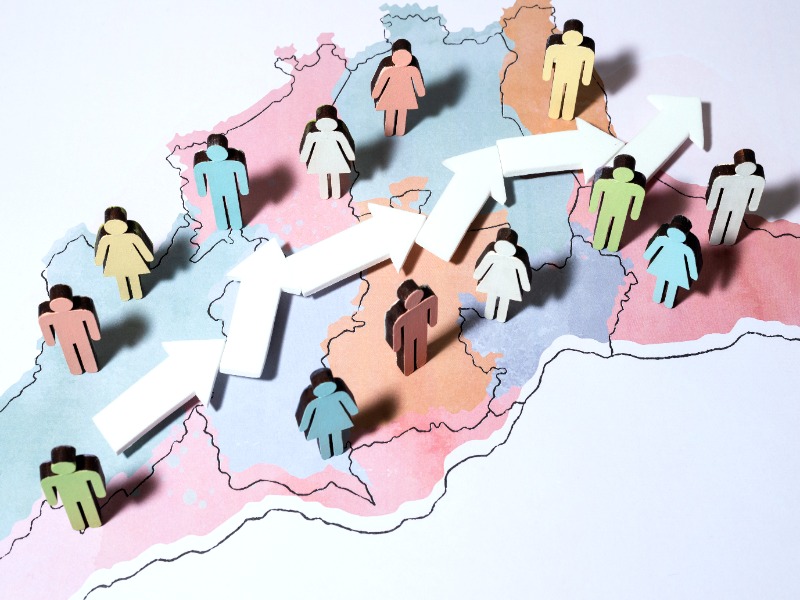
Photo retrieved from FREEPIK.