Modern military power depends on mobility. NATO’s fighter aircraft, naval fleets, transport systems, and surveillance infrastructure all require enormous amounts of fuel to sustain readiness and deterrence. Extreme weather events now threaten military infrastructure, melting Arctic ice intensifies geopolitical competition in the High North, and supply-chain instability becomes a growing strategic concern for allied governments.
Still, the push toward sustainable defence raises difficult questions. Modern militaries remain heavily dependent on fossil-fuel-intensive systems that cannot easily be replaced without affecting operational readiness. While NATO has introduced initiatives focused on resilience, emissions reduction, and climate adaptation, many of the systems central to modern warfare remain energy-intensive. The Alliance therefore faces a broader strategic dilemma: how can it reduce environmental vulnerabilities without weakening the operational capabilities that deterrence still depends on?
- Climate Security and the Limits of Sustainable Defence
Over the past decade, NATO has increasingly treated climate change as a security issue. Extreme weather events now threaten military infrastructure and disrupt transportation networks across Allied states. Melting Arctic ice and rising sea levels are reshaping geopolitical competition in the High North, an area of growing strategic importance for both NATO and Russia. Climate-related instability is also linked to migration pressures and political fragility. Within defence circles, climate change is often described as a “threat multiplier”.
In 2021, the Alliance adopted its Climate Change and Security Action Plan, which aimed to integrate climate considerations into defence planning, infrastructure resilience, and military operations. NATO’s 2022 Strategic Concept similarly identified climate change as one of the defining challenges shaping the alliance’s broader security environment. Rather than framing climate primarily through environmental policy, NATO increasingly approaches it in terms of preparedness, resilience, and operational effectiveness. This reflects a wider shift across Western defence institutions, which increasingly view climate adaptation as necessary for military readiness.
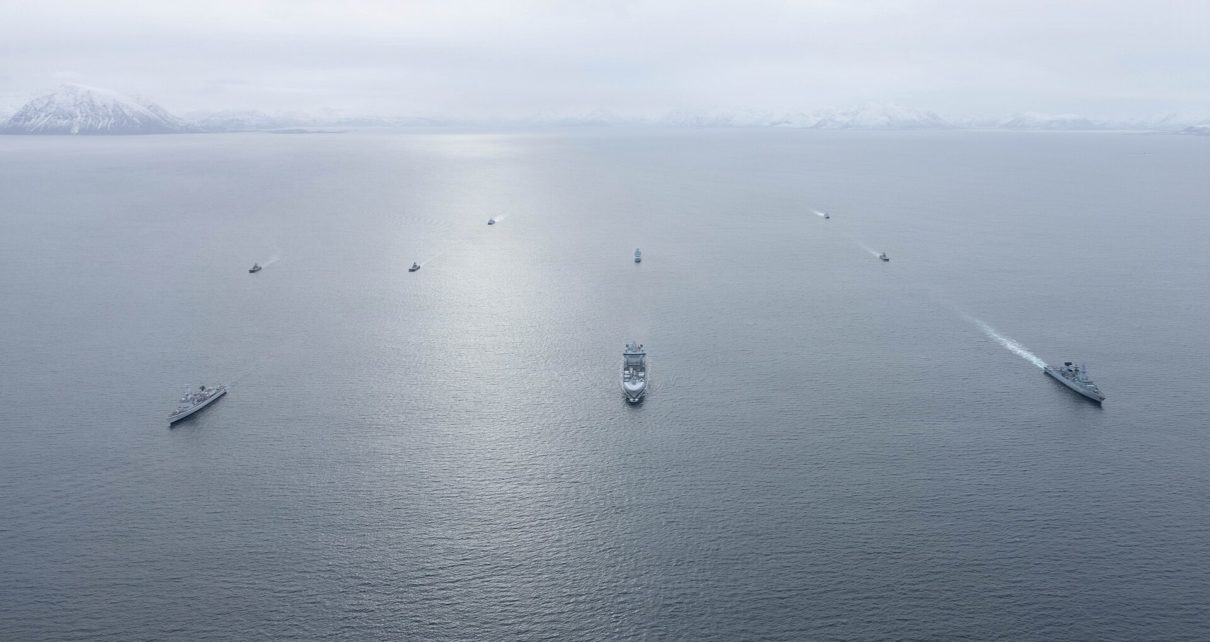
Yet recognizing climate risks is far easier than reducing the environmental footprint of modern militaries themselves. Defence institutions remain deeply dependent on fossil fuels. Fighter aircraft, naval fleets, and armoured vehicles all require energy-dense fuel systems that can operate reliably in unpredictable, high-risk environments. Military doctrine also continues to prioritize speed, mobility, and rapid force projection, all of which demand enormous logistical and energy capacity. As a result, many of the systems central to modern deterrence remain difficult to decarbonize without raising concerns about operational reliability and readiness.
- The Carbon Reality of Modern Warfare
The environmental costs of modern military systems have become increasingly difficult to ignore. Research on U.S. military fuel consumption highlights the scale of emissions generated through global deployments, transportation networks, equipment maintenance, and overseas infrastructure. Sustaining military operations requires the constant movement of fuel, weapons, machinery, and personnel across long distances, often under unstable conditions.
Russia’s invasion of Ukraine further exposed these realities. Since 2022, NATO members have expanded defence spending, reinforced deployments along the Alliance’s eastern flank, and accelerated military production. Before the invasion, several European states remained heavily dependent on Russian fossil fuels despite broader commitments to emissions reduction and energy transition. The result was a difficult balancing act between long-term climate goals and immediate security needs. For many NATO governments, the conflict reinforced the idea that strategic vulnerability can emerge not only from military weakness, but also from unstable supply chains and external energy dependence.
These pressures help explain why many NATO sustainability initiatives focus more on resilience and efficiency than on full decarbonization. Electrification may gradually become viable for certain support systems or domestic infrastructure, but combat environments create very different constraints. Heavy military equipment still requires energy-dense fuel systems capable of functioning reliably during deployments and high-intensity operations. Defence planners are therefore often cautious about adopting technologies that could compromise operational readiness under conflict conditions. The challenge NATO faces is not simply technological, but strategic. Efforts to reduce military emissions continue to collide with the operational demands of deterrence, mobility, and force projection.
- The Strategic Contradiction of “Green Defence”
NATO’s climate agenda is shaped by a contradiction that has no easy solution. Climate adaptation is becoming increasingly necessary for military planning, yet the Alliance’s ability to deter adversaries and respond rapidly to crises still depends on carbon-intensive systems central to modern warfare. At a time of growing geopolitical instability, NATO members are being asked to strengthen military readiness, expand defence production, and modernize capabilities while also reducing environmental vulnerabilities.
This tension has become especially visible since Russia invaded Ukraine. Across Europe, governments have increased defence spending, reinforced military infrastructure, and accelerated rearmament efforts after years of underinvestment. Yet the expansion of military production and operational activity also carries environmental costs that remain largely secondary within defence policy debates. For most governments, immediate security concerns continue to take priority over long-term emissions reduction goals.
The dilemma extends beyond military operations alone. NATO governments increasingly frame energy transition as part of broader strategic resilience, particularly after Europe’s earlier dependence on Russian energy exposed major vulnerabilities. At the same time, many green technologies rely on fragile global supply chains and strategically sensitive critical minerals. Reducing one form of dependency may therefore create another.
For NATO, the challenge is no longer recognizing climate change as a security issue but managing its consequences without compromising military effectiveness. Climate risks increasingly shape infrastructure, operational planning, and energy security across the Alliance. Yet modern deterrence still depends on energy-intensive systems that remain central to readiness and force projection. While NATO can improve resilience and reduce certain vulnerabilities, balancing sustainability goals with the realities of modern warfare will remain a difficult task for the foreseeable future.
Ultimately, NATO’s growing focus on climate security reflects a broader shift in how modern security threats are understood. Climate change shapes military infrastructure, operational planning, energy security, and geopolitical stability across the Alliance. Yet modern deterrence still depends on fossil-fuel-intensive systems that remain central to military readiness and force projection. While NATO can improve resilience and reduce certain vulnerabilities, the goal of a fully sustainable military remains difficult to achieve under current strategic conditions. The challenge facing the Alliance is therefore not simply how to become greener, but how to adapt to climate realities without weakening the operational capabilities that modern deterrence still requires.