Throughout NATO’s 76-year history, the Arctic occupied an uncertain place in alliance strategy. The joining of Finland into NATO in 2023 and Sweden in 2024, prompted by Russian manoeuvres and threats, has quietly but decisively changed the geography of NATO, making the northern flank a core allied theatre. This development redefined NATO’s deterrence concepts and responsibility-sharing in the High North. Canada can play a key and central role by adding a layer of cohesion to current security efforts.
Canada’s strategic location in the High North allows it to connect Europe and North America geographically and institutionally. This role is inherited in the continental defence architecture, transatlantic fortification routes and early warning networks that bind Europe’s northern latitudes’ security to North American defence. The country is a pivotal Arctic actor, yet a reticent one. It is silent in NATO’s discourse surrounding the region. This gap between Canada’s strategic relevance and its institutional influence is wide. This article explains how NATO’s northern expansion has changed alliance priorities, and why Canada remains underutilized and curiously discreet. Addressing this gap matters for Canada and for the overall alliance cohesion and deterrence efforts of NATO.
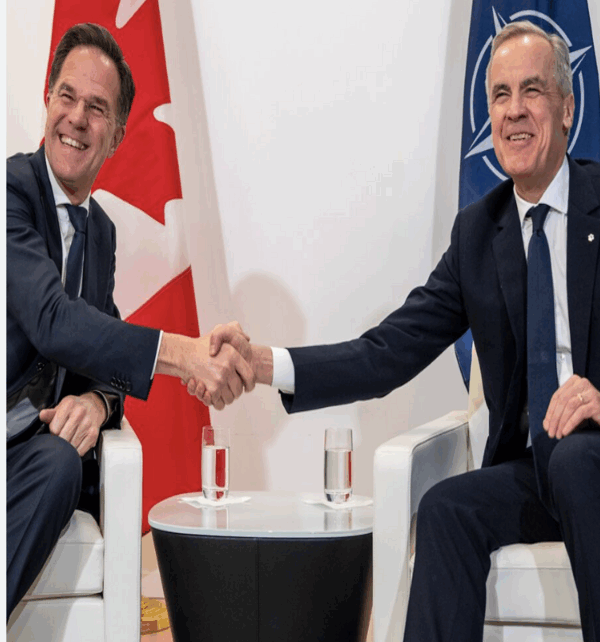
Expansions need bridges. So does the expanding map of NATO. Today, the alliance increasingly operates across the Nordic–Arctic arc, treating the globe’s northern axis as an integrated operational space rather than a patchwork of nationally bounded areas. This theatre covers multiple domains, necessitating enhanced surveillance, early detection, shorter warnings and coordinated efforts. These needs are not just geographic and strategic imperatives, but are connecting ones too. Although NATO has not adopted a formal Arctic strategy, it has increasingly identified the polar region as strategic within its broader deterrence and defence posture. This opposes the previous presumptions of the region being insulated from alliance politics. Today, the security of the polar theatre has normalized under the NATO deterrence mechanism, and this normalization is affecting both the planning and leadership across the alliance. So, this presents Canada with its moment to chart NATO’s course in the northern flank, which is a critical test for the alliance’s unity. Failure to establish a presence may weaken the alliance’s cohesion and leave both Canada and NATO vulnerable. However, if grasped, the prospective success will solidify Canada’s leadership at this critical time and strengthen NATO. Current efforts seem to be yielding positive results; at the World Economic Forum 2026, Canadian PM Carney and NATO Secretary General Rutte reiterated the growing need for northern security.
Unlike the Baltic or eastern flanks of the alliance, the Arctic has no formally designated organizational anchor in NATO. Rather, Arctic concerns are scattered throughout the NATO deliberations on deterrence, maritime security, resilience and climate adaptation. Canada can be that anchor in shaping the northern frontier’s coordination and posture.
The significance of Canada for the Arctic is pivotal and structural. The northernmost link between Europe and North America runs through Canadian territory, and the polar archipelago, maritime approaches and airspace of Canada are vital for continental defence. Being an active core of continental operational integration with North American security through NORAD, the Canadian prospective role converges with NATO’s evolving deterrence architecture. The present attempts to modernize NORAD demonstrates this. The investments in over-the-horizon radar, space-based sensors, and infrastructure in the north are meant to cope with emerging threats and long-range strike capabilities. Although these are bilateral initiatives, the impact is not limited to North America; they strengthen alliance airspace control over the northern approaches to the Arctic.
Along with security, climate change also adds weight to the relevance of Canada. The melting ice is not only increasing accessibility, commercial traffic and strategic interest in the Arctic, but it is also introducing new uncertainties and operational challenges. It is a tradition of sovereignty, security and collaboration in such terrain and working conditions that taught Canada valuable lessons. NATO allies can leverage them.
Unfortunately, the Canadian policy decisions have played a role in creating an ambiguity in the Canadian position in the Arctic. It has traditionally framed Arctic engagement through the lenses of sovereignty, environmental stewardship, and Indigenous consultation. This prism is normative and outside the alliance discourse. The outcome is a paradoxical position of Canada. Influence within NATO does not come automatically. It is practised, earned and claimed through agenda-setting, conceptual leadership, policy coherence and institutional presence. Unless there is a Canadian policy connection between the security of this icy region and the deterrence logic of NATO, Canada will remain a mere supportive player, but will not be among the policy architects responsible for the region’s future.
The High North has traditionally relied on stability, which was based on restraint and predictability. Restraint does not mean strategic silence, nor does leadership mean escalation. Canada can perform based on the same principles. In fact, Canada is in a good position to influence the development of the NATO Arctic involvement in deterrence without signalling any bravado. A concrete manifestation of this is the leadership of Canada in the Icebreaker Collaboration Effort (ICE Pact) with the US and Finland. The ICE Pact enhances Arctic presence and access. It seeds the role of Canada as a bridge between North American and Nordic security strategies without indicating militarization, through the coordination of icebreaker design, production, and operational concept. In addition, there is also institutionalized leadership in the NATO Climate Change and Security Centre of Excellence (CCASCOE) in Montreal. The centre is purely a Canadian-hosted and Canadian-led NATO hub that emphasizes the role of climate risk, human security, and infrastructure resilience as a broader concept of the role of Arctic security beyond the mere posture of the force. Also, recent Canadian investments signify a more integrated responsibility-sharing approach. It is well illustrated in the federal pledges of dual-purpose infrastructure in the north, with a fund of one-billion dollars, which supports the Indigenous and northern communities while sustaining the NATO and NORAD operations of surveillance, mobility, and resilience.
Canada’s understated and under-performed Arctic role has implications beyond the region too. NATO cohesion is rapidly becoming reliant on mutual threat perception among European and North American allies. The perception stems from Russia’s extensive military modernization, China’s declared polar interests and investments vis-à-vis the alliance’s shared vulnerabilities in undersea infrastructure. The strategic northern expanse is among the few theatres where these concerns and views of the NATO members converge unanimously. The more European allies involve themselves in the High North, the more Canadian leadership is needed to strike a balance between continental and transatlantic interests. Canada is also a two-way member of NORAD and NATO. This duality, given Canada’s geographical proximity to the Arctic, provides it a unique capacity to integrate the North American defence into the larger allied deterrence system. The unwillingness to use this role presents risks of fragmenting the singular polar region’s security into parallel European and North American strategies, which fractures the alliance cohesion.
Why should NATO want a more impactful Canada? Because without it, the alliance risks strategic and legal blindness in the North and fractured unity among Arctic members, essentially, operating half-blind in a theatre where Canada owns half of the coastline, holds the only reliable maps and exercises legitimacy with Indigenous and northern communities. As NATO’s strategic frontier, the Arctic requires that Canada leverage its geography and geopolitics to ensure that its central position is no longer implicit and silent but vivid and explicit.
Disclaimer: Any views or opinions expressed in articles are solely those of the authors and do not necessarily represent the views of the NATO Association of Canada.