This article was written prior to the joint US-Israel attack on Iran. The following article is a reflection of events prior to military intervention.
The recent protest in Iran, which began on December 28, 2025, is far more than a reaction to economic hardship. Although the initial unrest was driven by inflation, currency devaluation, and worsening living conditions caused by expanded international sanctions linked to Iran’s nuclear activities, the movement has evolved into a cultural and identity‑based challenge to the Islamic Republic. The shift in language from #IranProtest2026 to #IranRevolution2026 signals a demand for systemic political change rather than limited economic reform. Given the 12‑day war with Israel in June 2025 which drew in the United States, and recent statements from President Donald Trump threatening possible military action or invasion, this internal conflict should be seen as a broader regional and international security concern.
Protest movements are not new in Iran. In 2022, the death of Mahsa Amini in police custody triggered a nationwide protest, exposing the state’s reliance on repression, including gender‑based control. The authorities’ response then, mirrors their tactics today: deflecting responsibility away from security forces such as the Islamic Revolutionary Guard Corps, the use of violence despite peaceful protests, and labeling opposition groups as terrorists. Today, mass arrests, internet shutdowns, and the underreporting of casualties continue, with some sources suggesting this may be the deadliest disruption since the 1979 Revolution. Since the protests began on December 28, 2025, sources report that more than 36,500 people have been killed within 30 days, with additional casualties still unaccounted for and expected. Nearly five decades later, protesters are rejecting the political and cultural order imposed by the conservative Islamic state and seeking a national identity rooted in pre‑1979 history. The regime’s consistent use of violence and suppression suggests that meaningful reform is impossible under the current system, deepening the public crisis.
According to the 2021 Canadian Census, there are approximately 200,000 Iranians residing in Canada. Diaspora activism has surged in major cities such as Vancouver, Toronto, and Montreal. Demonstrations have focused on state violence, demands for freedom, and ongoing human rights concerns in Iran
Yet the diaspora remains divided over the question of foreign involvement, specifically with the United States’ interest in protecting the protestors in Iran through physical intervention. Some argue that external intervention is necessary, often expressing hope that the United States could play a decisive role. Others remain cautious, warning that foreign involvement could further destabilize an already fragile state. These debates are shaped by anxiety and helplessness, especially as many in the diaspora are cut off from family members due to internet blackouts. While Elon Musk’s Starlink has been proposed as a possible solution, it remains costly and dangerous to use in the country, potentially leading to severe punishment.
International Security Concerns
Iran’s security challenges go beyond the Middle East and into the Euro‑Atlantic sphere, creating significant implications for NATO allies. This must be understood as a long‑term challenge rather than a temporary disruption.
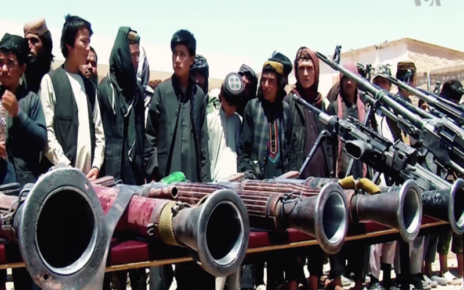
Tehran has become a key supplier of military equipment to Russia in its war against Ukraine with drones, ballistic missiles, small arms ammunition and artillery which began not long after Russia’s invasion in 2022, which maintains their offensive strength in the war. In return, Moscow supports Iran’s military modernization, enabling both states to more effectively challenge U.S. and NATO interests. This cooperation also bridges NATO’s Southern and Eastern flanks, which were once separate but now represent a unified strategic threat.
At the same time, Iran’s nuclear ambition remains a security concern given that they have reduced their cooperations with the International Atomic Energy Agency and have not been following through in the required commitments under the Joint Comprehensive Plan of Action. Therefore, Canada has responded by reposing UN aligned sections to restrict nuclear material, financial support, and arms transfer as parts of wider efforts to limit Iran’s capabilities.
There have already been incidents involving Iranian‑made drones violating the airspace of NATO members such as Romania and Latvia. These events expose vulnerabilities in NATO air‑defence systems and highlight the persistent underestimation of Iran’s missile and drone capabilities, despite the lessons of the June conflict between Iran and Israel.
Beyond its partnership with Russia, Iran is deepening ties with China and North Korea, revisionist powers that frequently challenge the rules‑based international order. None of these states have shown any intention to intervene directly on Iran’s behalf, however, assuming they would never intervene would be a risky miscalculation.
Although Iran does not currently possess a nuclear weapon, and some facilities were set back during the 12‑day war, its near‑nuclear status provides significant strategic leverage. Continued enrichment, restrictions on inspections, and withdrawal from non‑proliferation agreements keep Iran’s nuclear ambitions at the center of global concern. A nuclear‑capable Iran would heighten the potential for regional conflict by expanding its missile and drone programs and providing greater support to its proxy networks. Drones, in particular, are low‑cost, scalable, and easily transferable, lowering the threshold to challenge NATO defence systems.
Key Recommendations
For Canada and other NATO allies, responding to the situation in Iran requires caution, a contrast to Trump’s top‑heavy threats of intervention. Military action could potentially trigger greater violence inside Iran and escalate tensions along and outside its borders, especially given Iran’s proxy networks.
A NATO report released in September emphasizes the need for strategic cooperation and deterrence rather than direct confrontation. Key recommendations include strengthening maritime security and enhancing naval cooperation with Gulf partners in the Red Sea to intercept and neutralize unmanned aerial vehicles (UAV); implementing robust counter‑proliferation measures; weakening Iran’s proxy networks by supporting states that oppose them; and limiting cooperation between Russia and Iran, particularly in military technology, to prevent further modernization of Iran’s militarization. It could also be beneficial NATO to coordinate with other countries in the Middle East, North Africa, and the Sahel to address the broader security environment.
Ultimately, Iran’s destabilization presents a multidimensional challenge that extends beyond domestic politics to include diaspora activism, instability in neighbouring countries, and growing concerns for NATO. In the short term. NATO faced logistical and financial constraints that limit its capacity for direct involvement in Iran, particularly as such large-scale engagement could strain resources for other objectives and risk escalating tensions with additional powers. Given the U.S fluctuation position on Iran, NATO is incentivized to avoid action that could create alliance divisions, which reinforces a short-term emphasis on deterrence and risk management rather than military intervention.
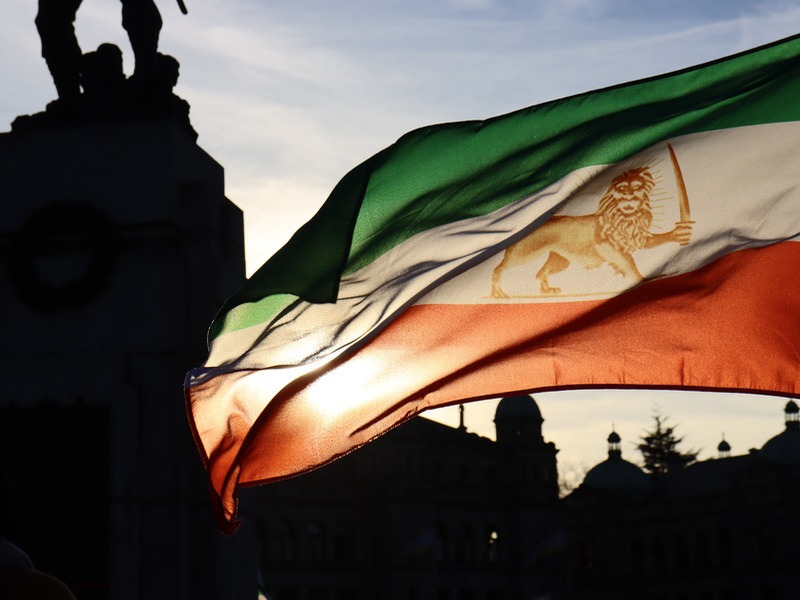
Image credit: The Lion and Sun Flag of Iran being displayed at a ‘Woman, Life, Freedom’ protest in Victoria, British Columbia (2022) by Nevin Thompson via Wikimedia Commons. Licensed under CC BY-SA 3.0.
Disclaimer: Any views or opinions expressed in articles are solely those of the authors and do not necessarily represent the views of the NATO Association of Canada.