The Arctic is warming up, both in temperature and tension. In the east, Russian nuclear icebreakers – specially purposed ships designed for the ice – are carving strategic routes through once-impassable waters. China declares itself a “near-Arctic state,” with ambitions of shaping the cold pursuit of Arctic dominance. Meanwhile, Canada, steward of the world’s longest Arctic coastline – stemming more than 162,000 km, remains entangled in procurement delays and policies that echo promises rather than actionable plans. While some states move with urgency; we move in circles in a time where presence defines power and where absence invites encroachment, this raises the question: is Canada falling dangerously behind?
Ice that once created natural barriers is melting, charting fresh routes for military movement, and strategic leverage. The IPCC warns that the planet is on track to pass the 1.5°C limit within a few years, a change that will position the Arctic as the centre of geopolitics. Still, these passages pose significant challenges: seasonal unpredictability, fragile ecosystems, shifting conditions, and high operational costs, which complicates sustainable access. The Northern Sea Route’s previously obstructed voyages have loosened over time, technology advanced as the ice melts which Russia and China race towards – while Canada stands by.
The Sea Route expansion in the Arctic means increased energy potential, shortened trade routes, and surveillance opportunities, which have transformed sovereignty as it now hinges on infrastructure, presence, adaptability, and political will. For Canada, the stakes are not merely a climate crisis, it’s Canada’s strategic edge in the geopolitical landscape. Each decision we postpone is space ceded to anti-Western actors, whose Arctic advances threaten to undercut Canada’s influence, weaken NATO’s northern posture, and redraw the balance of power in our own backyard. The Arctic is thawing, and with it, Canada’s grip of its sovereignty.
Canada’s Arctic policy has long favoured optics over substance. While Stephen Harper’s “The Call of the North” speechinvoked emotional appeals, it also neglected shipbuilding contracts, underdelivered radar systems, and quietly an Arctic Strategy disappeared. Meanwhile, Justin Trudeau’s 2016 pledge of a comprehensive Arctic policy has fared little better. Nearly a decade later, we have no integrated doctrine, only scattershot initiatives, delayed NORAD upgrades, a modest fleet of Arctic patrol ships, and fragmented infrastructure spending. Trudeau and Harper are not the only former Prime Ministers who have neglected the Arctic, Brian Mulroney and John Diefenbaker also offered empty northern promises, with future Prime Ministers suggesting little change from course.
Canada isn’t absent from the Arctic; it’s incoherent, and in geopolitics, incoherence will read as weakness. This failure is not just fiscal or military, it is conceptual. Sovereignty cannot simply be declared in Ottawa and hoped into existence: it must be exercised on the ground, Yet arctic communities continue to endure systemic shortfalls in housing, transportation, and emergency response. Investments in dual-use assets, those serving both civilian and strategic needs, remain ad hoc, delayed, and politicized. Canada’s failure in the Arctic is not because of apathy, but rather fragmentation.
However, other nations are not so restrained. Over the past decade, Russia has fortified its northern flank with radar systems, airfields, and a nuclear-powered icebreaker fleet. Its 2007 seabed flag-planting beneath the North Pole, once dismissed as an empty spectacle, now reads as a long-term power play. Since its 2022 invasion of Ukraine, Moscow has further embedded the Arctic into its national defence strategy. China, while far from the polar ice, is now an Arctic player in all but latitude. Its 2018 Arctic Policy enabled partnerships with Russia and investments in the Polar Silk Road. Beijing has launched scientific expeditions that double as surveillance missions, is constructing nuclear icebreakers, and securing critical mineral footholds across the circumpolar region. For China, the Arctic is a vital geopolitical asset as it offers a means of bypassing U.S.-controlled maritime routes.
Likewise, NATO has begun to recalibrate. In 2022, the United States released a formal Arctic strategy, warning of a deteriorating regional security environment. Former NATO Secretary General Jens Stoltenberg has publicly cautioned that Canada’s lack of northern readiness poses risks not only to national sovereignty, but to alliance cohesion. But the greatest threat to Canadian sovereignty may not lie abroad; it lies with our own mandates, bureaucratic silos, and southern-centric political cycles which continue to paralyze strategic planning. Without meaningful decentralization, Arctic governance will continue to fall behind emerging challenges, sidelining northern communities from meaningful policy decisions.
It is time for Canada to integrate the Arctic into its central national agenda and not let the matter fade into the background of bureaucratic indifference. This begins with coherence; we need a binding Arctic Resilience and Security Strategy, backed by legislation, that integrates defense, climate adaptation, infrastructure, and Indigenous governance. It must feature enforceable timelines, independent oversight, and cross-ministerial authority. The United States’ 2022 National Strategy for the Arctic Region offers another model, with its legally mandated milestones, inter-agency coordination mechanisms, and emphasis on community resilience. Similarly, Finland’s 2021 Arctic Strategy integrates civil preparedness with military readiness, subject to consistent legislative oversight and explicitly centred on sustainability, Indigenous rights, and defence coordination.
Moreover, institutional architecture must evolve. Canada cannot delay in establishing a permanent, Northern-based Arctic Council, domestic in scope, legislatively empowered, and sufficiently funded to shape policy beyond electoral cycles. This would not be without precedent. Canada’s own establishment of the Territorial North Strategy Table in the early 2000s offered a promising, though short-lived, model for cross-government coordination, yet rather acted in a top-down approach in practice. Similarly, Norway has long embedded regional governance into national planning. Norway’s High North Strategy integrates security, infrastructure, science, and Indigenous engagement under one coherent framework. Canada must move in this direction. A permanent Northern-based council with legislated authority and interministerial reach, could provide the stability Arctic policy has long lacked beyond election cycles.
Finally, Canada must stop mistaking symbolic gestures with substantive strategy. Sovereignty today is not measured by flags but by functionality, the ability to project enduring, meaningful authority in a region others actively court. That means investing not just in steel and satellites, – which are crucial for national infrastructure – but also in systems, institutions, and legitimacy for preserving long-term political stability. Declarations are no longer enough. Presence, and preparedness are the new currency of sovereignty; if Ottawa continues stalling its efforts in the Arctic, it won’t merely be the ice that vanishes, it will be our credibility, and ultimately, our sovereignty.
The Arctic is no longer on the sidelines, it is now become a focal point of global rivalry, and Canada risks becoming the absentee landlord of its own northern sphere. The failure of either party to prioritize the Arctic will carry grave consequences ahead; failure to act today invites disaster tomorrow. As others build and deploy, we must ask: do we wish to be a sovereign power, or a symbolic one?
Any views or opinions expressed in articles are solely those of the authors and do not necessarily represent the views of the NATO Association of Canada.
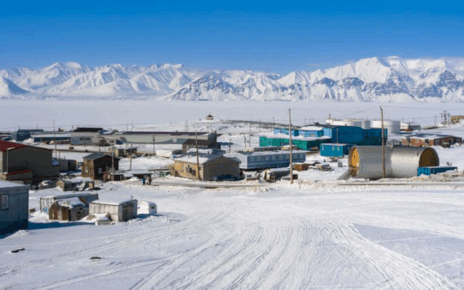
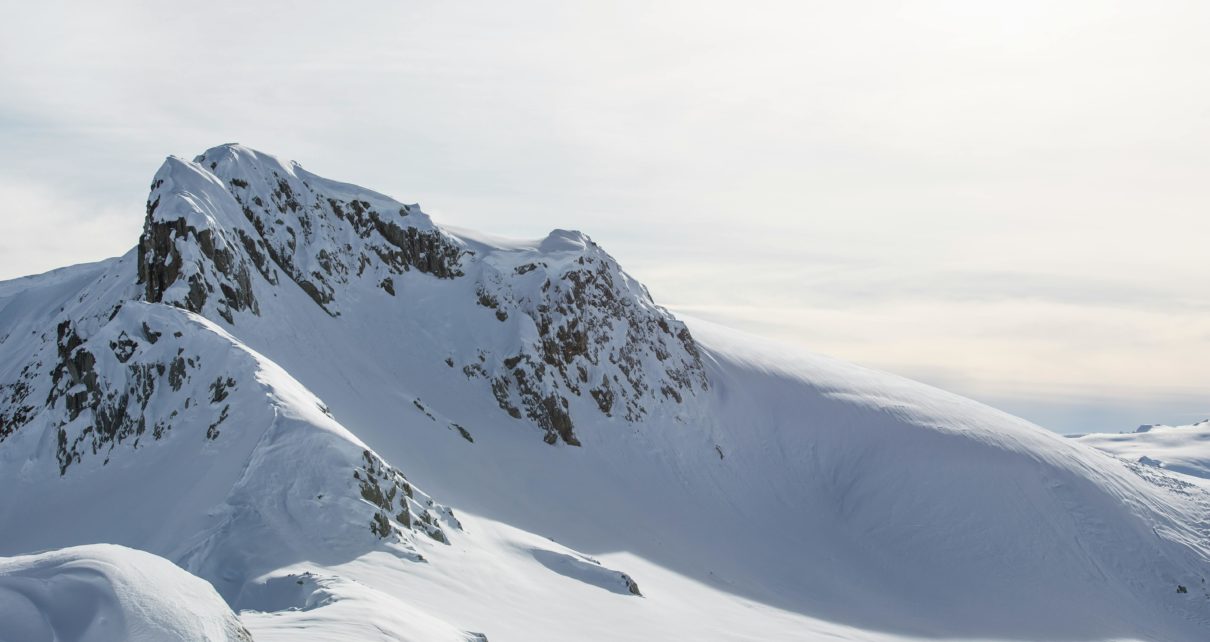
Photo: “Mountain Covered With Snow” by Sebastian Voortman. Free to use under the Pexels license. Pexels.