Kyle MacDonald

Introducing a New Program Focusing on the Canadian Reserve

The Primary Reserve is the Foot Print of the Military in the  Canadian Community 

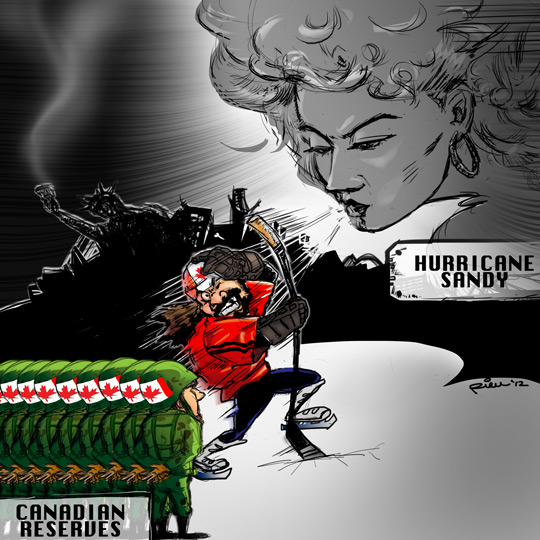
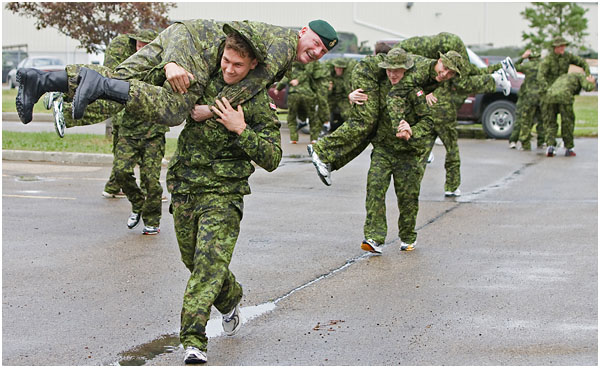
The Strategic Reserve Program is a new initiative by The NATO Council of Canada, which aims to push the Primary Reserve of the Canadian Forces into the forefront of Canadian public debate. Our objective is to make the challenges, successes, and accomplishments of the Canadian Primary Reserve more visible and familiar to the Canadian public, business leaders, policy makers and politicians. Our aim for this program is to educate these different sectors by the use of publications, interviews, and community outreach.

Mainstream media and academia have often neglected to write on such a vital topic. The Primary Reserves have played a pivotal role in defending Canada and its interests. For example, when the Second World War broke out in September 1939, about half the volunteers joining the Canadian Active Service Force to fight overseas were former or serving members of the Non-Permanent Active Militia and the Permanent Active Militia. During operations in Afghanistan, about 20 per cent to 30 per cent of Canada’s brigade group in Afghanistan were reservists.

The Primary Reserve includes 4000-strong Naval Reserve, the Air Reserve of some 2300 personnel, a Health Services Reserve, the Judge Advocate General Reserve, the new Canadian Special Operations Command Reserve, and the Army Reserve.

The NATO Council of Canada Strategic Reserve Program is one of a kind, and it is our hope to become the hub of Canadian Primary Reserve affairs.

Kind Regards,

Strategic Reserve Program Editor,

Kyle MacDonald


Author

  • The mission of NATO Association of Canada is to promote peace, prosperity, and security through knowledge and understanding of the importance of NATO.

    We strive to educate and engage Canadians about NATO and NATO’s goal of peace, prosperity and security. NATO Association of Canada ensures that we have an informed citizenry able to contribute to discussions about Canada’s role on the world stage.

    As a leading member of the Atlantic Treaty Association (ATA), NATO Association of Canada has strong and enduring ties with sister organizations in many of the alliance countries, as well as members of NATO’s “Partnership for Peace” and “Mediterranean Dialogue” programmes. The NAOC has had a leading role in the recent transformation and modernization of the ATA, and helped to create and develop the Youth Atlantic Treaty Association (YATA).

    The NAOC has strong ties with the Government of Canada including Global Affairs Canada and the Department of National Defence. We are constantly working to create and maintain relationships with international organizations such as the World Bank Group, the European Bank of Reconstruction and Development, NATO Headquarters, the International Criminal Court, and other prominent international NGOs and think tanks.


    View all posts
NATO Association of Canada

The mission of NATO Association of Canada is to promote peace, prosperity, and security through knowledge and understanding of the importance of NATO.

We strive to educate and engage Canadians about NATO and NATO’s goal of peace, prosperity and security. NATO Association of Canada ensures that we have an informed citizenry able to contribute to discussions about Canada’s role on the world stage. As a leading member of the Atlantic Treaty Association (ATA), NATO Association of Canada has strong and enduring ties with sister organizations in many of the alliance countries, as well as members of NATO’s “Partnership for Peace” and “Mediterranean Dialogue” programmes. The NAOC has had a leading role in the recent transformation and modernization of the ATA, and helped to create and develop the Youth Atlantic Treaty Association (YATA). The NAOC has strong ties with the Government of Canada including Global Affairs Canada and the Department of National Defence. We are constantly working to create and maintain relationships with international organizations such as the World Bank Group, the European Bank of Reconstruction and Development, NATO Headquarters, the International Criminal Court, and other prominent international NGOs and think tanks.