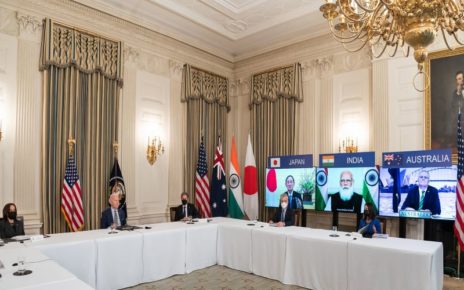
North Korean shells, missiles and soldiers have become part of Russia’s war against Ukraine, and what Pyongyang learns there will shape the threat facing Japan for years. At the July 2026 Ankara summit, NATO and its Indo-Pacific partners discussed both the war in Ukraine and North Korea, with Japanese Defence Minister Shinjiro Koizumi stressing that “the security of the Euro-Atlantic and the Indo-Pacific is inseparable.” Yet the framework that guides NATO’s partnership with Japan says little about the intelligence needed to monitor the military cooperation between Moscow and Pyongyang.
The NATO-Japan Individually Tailored Partnership Programme (ITPP) for 2023 to 2026 outlines 16 partnership goals, ranging from cyber defence to maritime security, yet intelligence is not among them. As that programme ends, the framework that succeeds it should make intelligence cooperation a declared goal, focused on tracking arms and technology transfers between Russia and North Korea and assessing how they change each country’s military capabilities, through regular assessment exchanges between Japan’s new National Intelligence Bureau and NATO intelligence staff beginning in 2027.
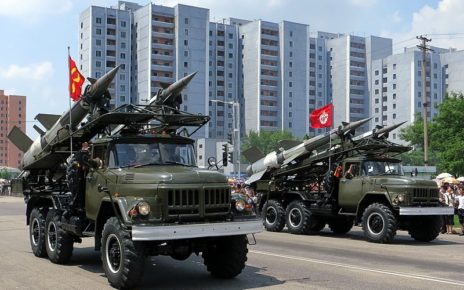
The extent of the Russia-North Korea relationship is well documented in the first report of the Multilateral Sanctions Monitoring Team (MSMT), which found that North Korea sent Russia up to 9 million rounds of artillery and rocket ammunition and at least 100 ballistic missiles in 2024, along with more than 15,000 troops by early 2025. The same report finds that Russia is believed to have supplied air defence and electronic warfare systems in return, along with data on how North Korean ballistic missiles performed in Ukraine, which reportedly helped Pyongyang improve their guidance. North Korea is also drawing lasting benefits from this exchange; the 2026 US intelligence threat assessment concluded that North Korean forces “have gained valuable combat experience,” while the commander of US Forces Korea testified that the partnership has significantly changed North Korea’s military capabilities.
Several Allies and Japan have already pooled their information on this cooperation outside NATO. Eleven states formed the MSMT in October 2024 to continue the work of the disbanded UN Panel of Experts, and most of the information in its first report came from participating states. Seven members are NATO Allies, and the other four are the Alliance’s Indo-Pacific partners (Japan, South Korea, Australia and New Zealand), known as the IP4. The coalition shows both a willingness to pool sensitive findings and the limits of informal arrangements, since the MSMT sits outside NATO, has no permanent mandate and has no direct connection to the assessments that inform Alliance decisions.
The need to coordinate intelligence now stems from changes in the threat itself, as cooperation between Moscow and Pyongyang is shifting from wartime improvisation to a formalized multi-year relationship. In April, the two sides agreed on long-term military cooperation, with Russian Defence Minister Andrei Belousov describing a military cooperation plan covering 2027 to 2031 that Moscow was prepared to sign this year. Intelligence cooperation is most useful at the outset of such a plan, when partners can establish a shared baseline of what has already been transferred and spot new forms of assistance as they first appear.
The Russo-Ukrainian war offers a rare window into these transfers, since much of the evidence comes from the battlefield. The MSMT drew on investigators who identified North Korean missiles used in Ukraine and on tracking ammunition shipments. Further transfers may follow, as the CRS notes that Ukrainian intelligence reported plans in August 2026 to send a North Korean missile unit with at least 120 ballistic missiles, although this remains an unconfirmed warning.
Russian support flowing to North Korea is harder to detect but more consequential for Japan, and the CRS also cites US Indo-Pacific Command testimony that North Korea is seeking Russian help with space launch vehicles, military satellites, missile technology and submarine propulsion. If fighting in Ukraine subsides, battlefield evidence will thin while that assistance continues out of view, leaving Allies and Japan reliant on a voluntary coalition.
Alongside these shifts in the threat, the partnership itself is at a checkpoint. The current ITPP expires in 2026, and NATO and its Indo-Pacific partners agreed at Ankara to build concrete cooperation in areas such as defence industry, cyber and technology, though the form that cooperation will take remains open. As the choices made during this transition will shape the partnership’s agenda well beyond 2026, this period offers the clearest opportunity to address the absence of intelligence from the current programme.
This coincides with the rebuilding of Japan’s own intelligence institutions, which began with the launch of its National Intelligence Bureau in July 2026. Tokyo also aims to establish a fully-fledged foreign intelligence service in 2027, and Japanese policymakers have reportedly sought input on these reforms from partners including the United States, Australia and Germany. Writing a NATO relationship into those plans would be considerably simpler than adding one once the new institutions’ practices are established. Delay would not rule out cooperation, but it would mean starting later, with thinner evidence, after Moscow and Pyongyang’s partnership plan is already under way.
An intelligence goal in Japan’s succeeding framework should be treated as a first step rather than an end point. Japan is the natural place to start, since it now has a single bureau to coordinate its intelligence community and its government has identified deepening Russian and North Korean military cooperation as one of the most significant developments affecting regional security. Once a working model exists, NATO could offer a comparable goal in its partnerships with South Korea, Australia and New Zealand. Over time, aligning these bilateral channels around a common agenda would make it easier for NATO and the IP4 to compare assessments, and could eventually support joint discussions where all parties are willing. That would extend the partnership’s practical cooperation, focused on areas of defence industry and cybersecurity, into the intelligence that underpins it.
Expectations should nonetheless remain modest, since intelligence sharing is difficult even among close allies. As Daniel Byman of the Center for Strategic and International Studies observes, the quality of multilateral intelligence exchange tends to be set by its least trusted member. One challenge stems from Turkey’s and Hungary’s cooperation with Russia makes other NATO members reluctant to share. Another is disagreement over NATO’s geographic scope, as demonstrated in 2023 when French President Emmanuel Macron opposed a proposed NATO liaison office in Tokyo, arguing that “the Indo-Pacific is not the North Atlantic.” A proposal centred on Russia’s war addresses that concern, since it targets a threat to the Euro-Atlantic area itself rather than extending NATO’s mission into Asia. Beginning with finished assessments rather than raw intelligence would further limit the risks for both sides while trust develops.
NATO and Japan should therefore take three steps as they define what follows the current ITPP. First, they should add a partnership goal committing both sides to regular exchanges of assessments on Russian and North Korean arms and technology transfers. Second, Japan should designate the National Intelligence Bureau as its counterpart to NATO intelligence staff and build that relationship into its planned foreign intelligence service. Third, Allies should agree to offer a similar goal to the other IP4 partners and examine how findings produced through the MSMT could inform NATO’s own assessments. Since Moscow has signalled that it is ready to put its military partnership with Pyongyang on a five-year footing from 2027, NATO and Japan should match that commitment by formalizing their own intelligence cooperation from the same year.
Disclaimer: Any views or opinions expressed in articles are solely those of the authors and do not necessarily represent the views of the NATO Association of Canada.
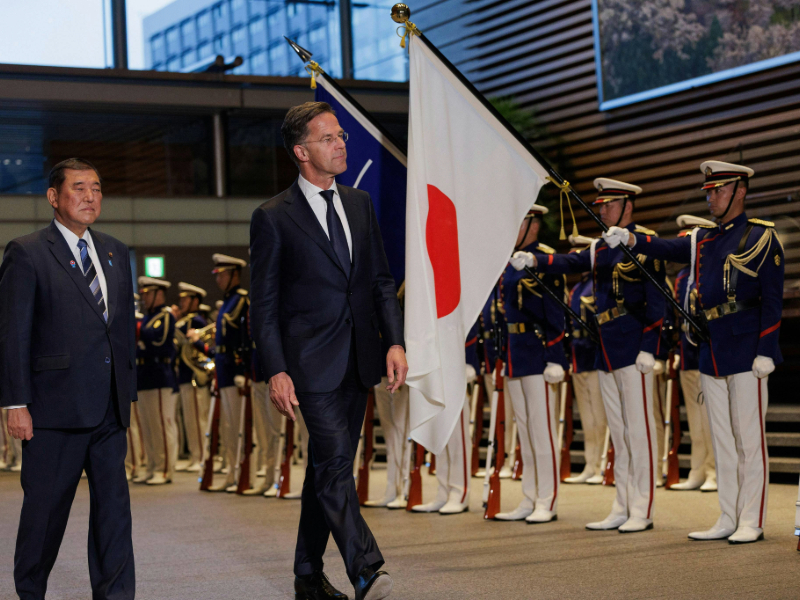
NATO Secretary General Mark Rutte meets the Prime Minister of Japan, Shigeru Ishiba – April 2025 (Photo: NATO)