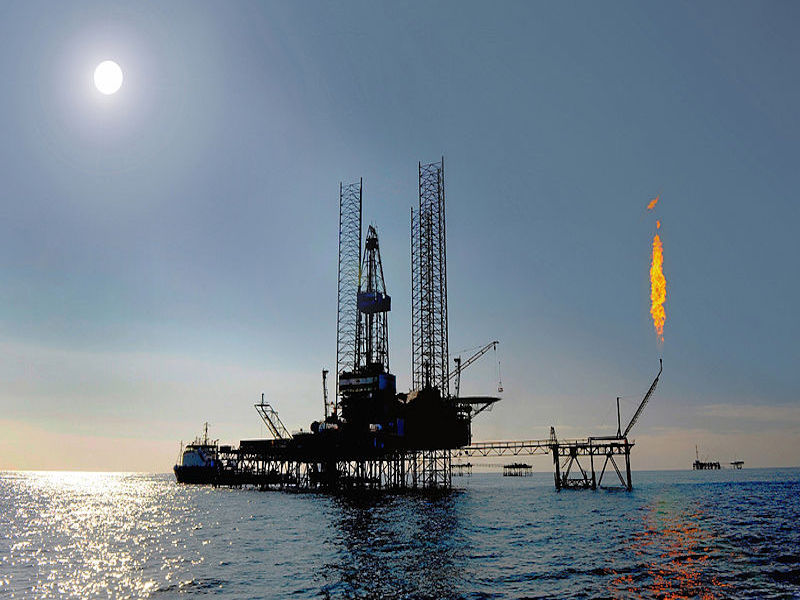
In this Article Dr. Robert M Cutler, examines the implications for Europe’s energy security of the recently agreement between Azerbaijan and Turkmenistan to co-develop the Dostluk hydrocarbon field in the Caspian Sea.
The NATO Association of Canada’s Energy Security Program, directed by Senior Research Fellow Dr. Robert M. Cutler, provides analysis and outreach on the full spectrum of energy-security concerns facing NATO members and partners. Core areas include the security of supply and demand, market and policy reliability, and the physical protection of critical energy infrastructure including supply chains for critical raw materials. The Program continuously assesses geopolitical, geo-economic, and military developments that may alter allied energy risks, options, and resilience. It advances public understanding and policy dialogue through webinars, the Energy Security blog, and sequenced series of Research Briefs, Policy Papers, and Research Studies. Contributors—including practitioners, scholars, and emerging analysts—are welcome. Please write to rmc@alum.mit.edu with the subject line “NAOC Energy Security Program” to propose articles, briefs, or events.
In this Article Dr. Robert M Cutler, examines the implications for Europe’s energy security of the recently agreement between Azerbaijan and Turkmenistan to co-develop the Dostluk hydrocarbon field in the Caspian Sea.
Le Directeur du Programme de Sécurité énergétique Dr. Robert M. Cutler a participé le 2 février à la Conférence annuelle « Voisinages » organisée par l’Institut d’études européennes de l’Université Saint-Louis – Bruxelles, qui porte cette année le titre : Quid de l’après Covid 19 pour la relation entre l’UE et ses voisinages : compagnonnage renouvelé ou proximité Read More…
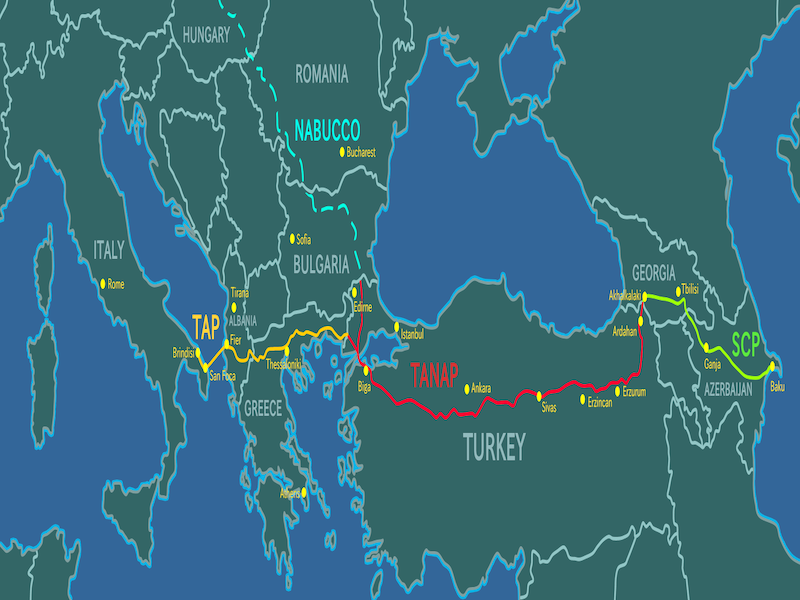
The year 2020 was very difficult for the energy sector, and the COVID-19 pandemic continues to have negative effects on it. Despite all challenges, however, the Trans Adriatic Pipeline (TAP) was completed and began commercial operations on 15 November 2020. The TAP is the European leg of the Southern Gas Corridor that transports gas to Read More…
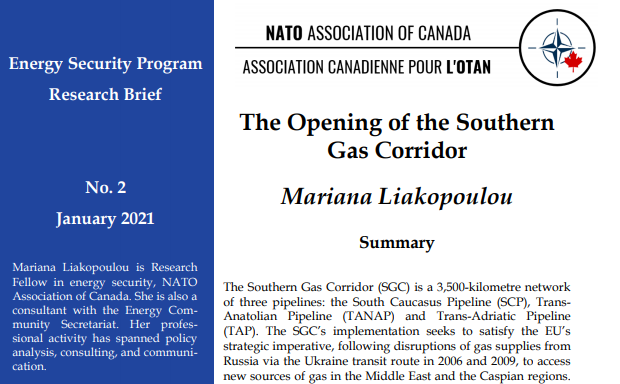
Download: Energy Security Research Brief No. 2 January 2021 (11 pages, 315KB) Title: The Opening of the Southern Gas CorridorAuthor: Mariana LiakopoulouSeries: Energy Security Program Research Brief No. 2Date: January 2021 The Southern Gas Corridor (SGC) is a 3,500-kilometre network of three pipelines: the South Caucasus Pipeline (SCP), Trans- Anatolian Pipeline (TANAP) and Trans-Adriatic Pipeline Read More…
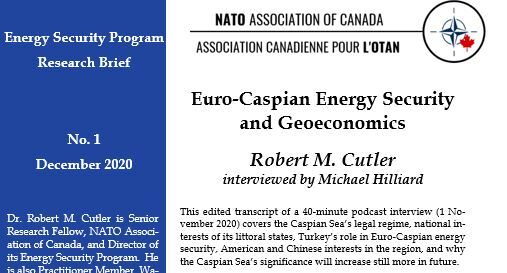
This edited transcript of a 40-minute podcast interview (1 November 2020) covers the Caspian Sea’s legal regime, national interests of its littoral states, Turkey’s role in Euro-Caspian energy security, American and Chinese interests in the region, and why the Caspian Sea’s significance will increase still more in future.
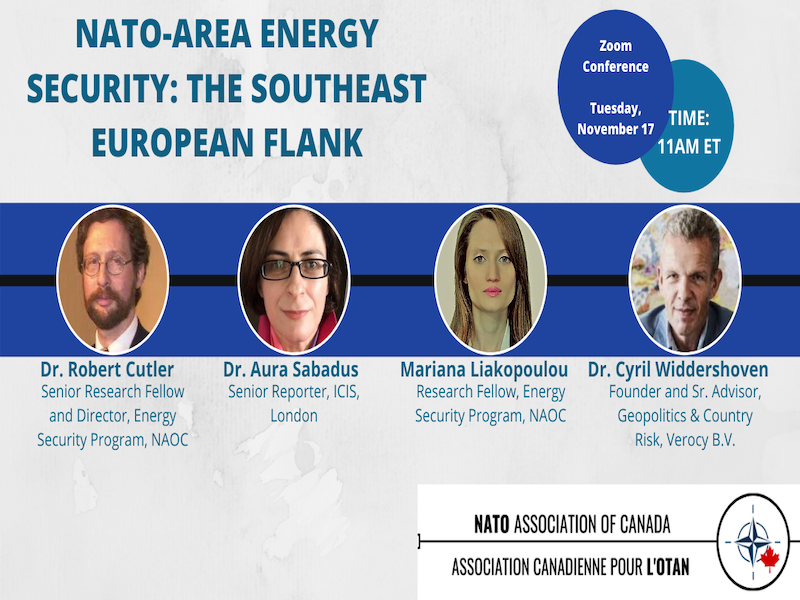
Title: NATO-Area Energy Security: The Southeast European FlankFeatured Speakers: Dr. Robert M. Cutler Senior Research Fellow and Director, Energy Security Program NAOC; Dr. Aura Sabadus Senior Reporter, ICIS London ; Mariana Liakopoulou Research Fellow, Energy Security Program NAOC ; Dr. Cyril Widdershoven Founder and Sr. Advisor Geopolitics and Country Risk Verocy B.V. Series: Energy Security Program Webinar Read More…
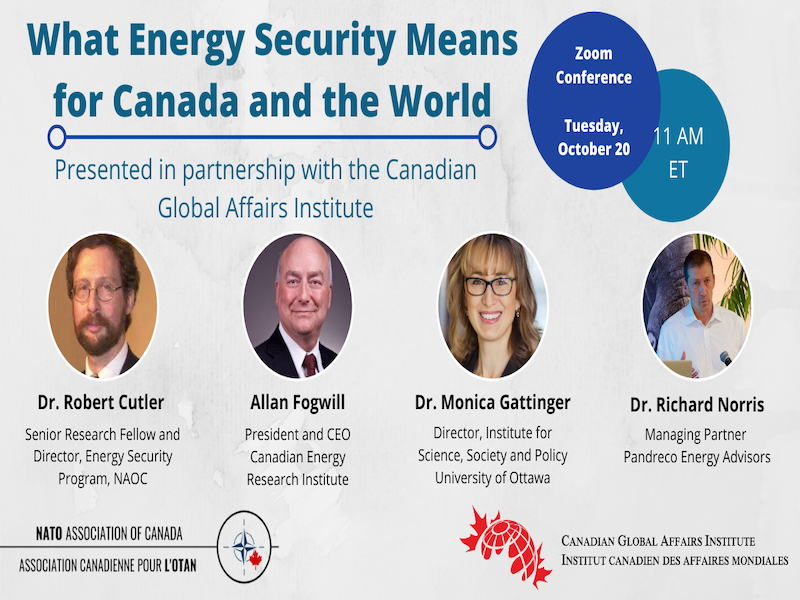
Title: What Energy Security Means For Canada and the WorldFeatured Speakers: Dr. Robert M. Cutler Senior Research Fellow and Director, Energy Security Program NAOC; Allan Fogwill President and CEO Canadian Energy Research Institute; Dr. Monica Gattinger Director Institute for Science, Society and Policy University of Ottawa; Dr. Richard Norris Managing Partner Pandreco Energy Advisors Series: Energy Read More…
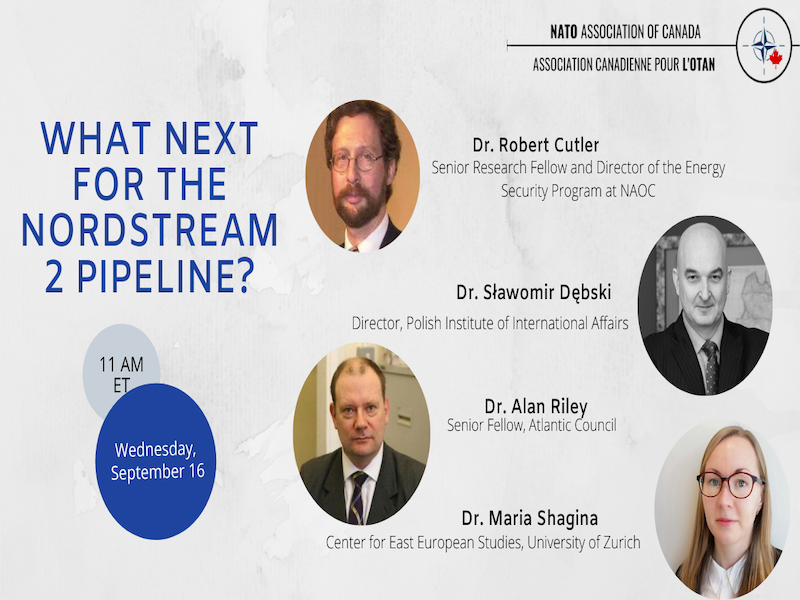
Title: What’s Next for the Nordstream 2 Pipeline?Featured Speakers: Dr. Robert M. Cutler (Senior Research Fellow and Director of the Energy Security Program at NATO Association of Canada), Dr. Sławomir Dębski (Director, Polish Institute of International Affairs), Dr. Alan Riley (Senior Fellow, Atlantic Council), Dr. Maria Shagina (Centre for EastEuropean Studies, University of Zurich)Series: Energy Read More…
Mariana Liakopoulou analyzes shifts in US and the EU energy policies, combined with ongoing market developments, and their implications on the Caspian-region and Central Asian states’ geopolitical significance.
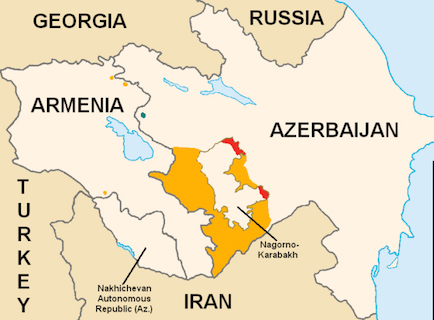
Shahmar Hajiyev analyzes the Nagorno-Karabakh conflict’s effect on the instability in the South Caucasus and its barriers to full regional economic integration.